Eco-Tech Wellness Hub
Thesis project integrating sustainable technology with wellness architecture
Outcome
Bilkent University Thesis Project - Exhibited at Basamaklar 2024
Scope
- —Sustainability focus
- —Wellness integration
- —Urban design
Tools
Methods
Project Overview
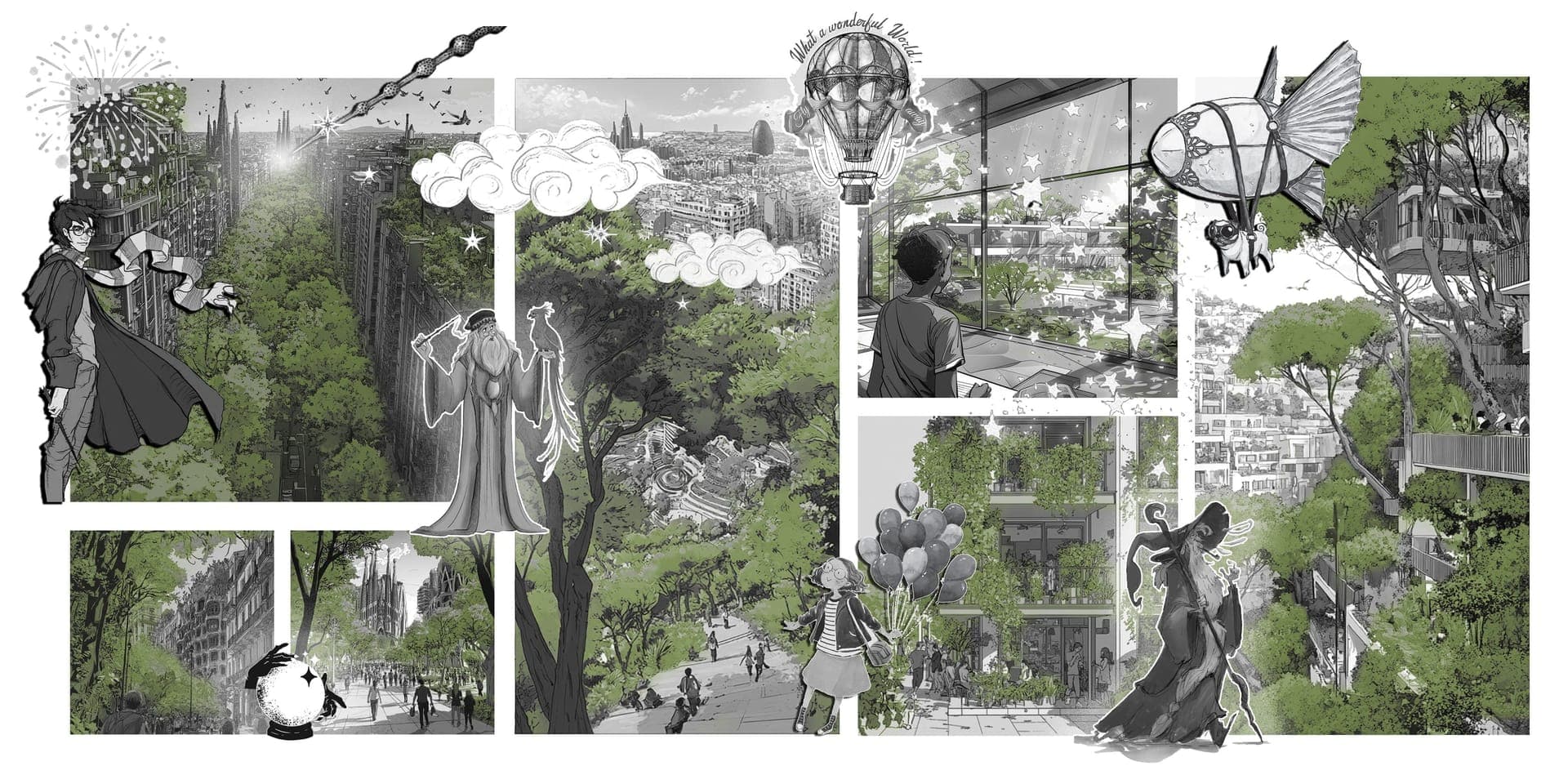
You are the wizard of your own well-being, conjuring a future where health, happiness, and nature thrive together.
Purpose
Mixed-use health infrastructure that integrates green density, public programs, and digital intelligence to address urban health challenges within Barcelona’s evolving green and innovation network.To build a new ecosystem of health, happiness, and nature, where people can thrive in their own way, with the support of a vibrant, sustainable urban environment.
Wellness
Rather than treating wellness as a closed medical function, the hub frames health as a continuous, collective, and spatial experience
Design Development
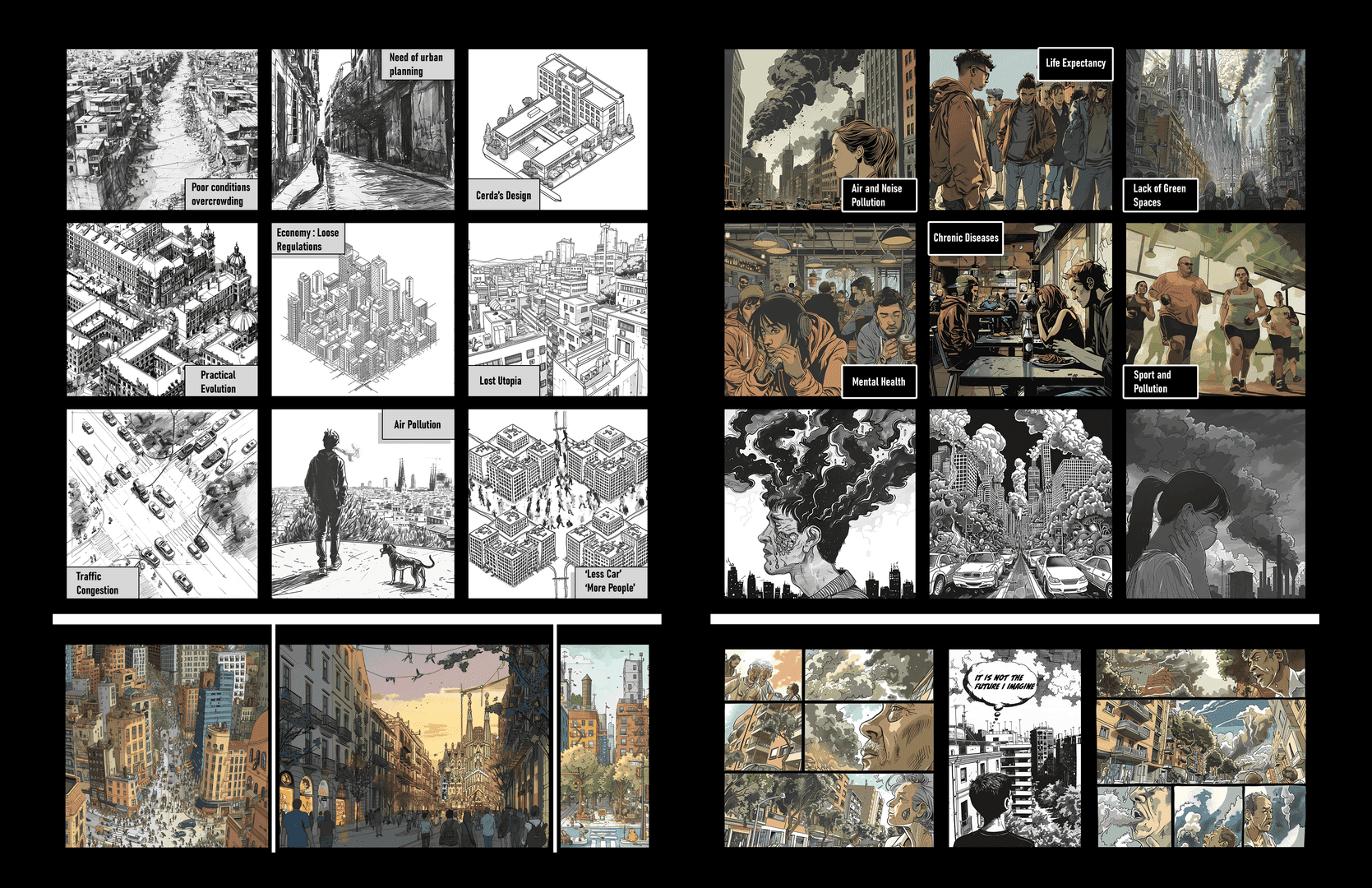
This project responds to Barcelona’s healthcare challenges by reinterpreting Cerdà’s early urban design principles through a contemporary wellness-oriented program. Health inequalities, under-resourced mental health services, chronic disease, fragmented care, air pollution, and overpopulation are the main challenges of the project.
Spatial Configuration
Cerdà’s original design began as a health-driven, egalitarian system prioritizing light, air, greenery, and social balance, but over time it was reshaped by economic pressures, densification, traffic dominance, and speculative development.
Future Urban Health Hub
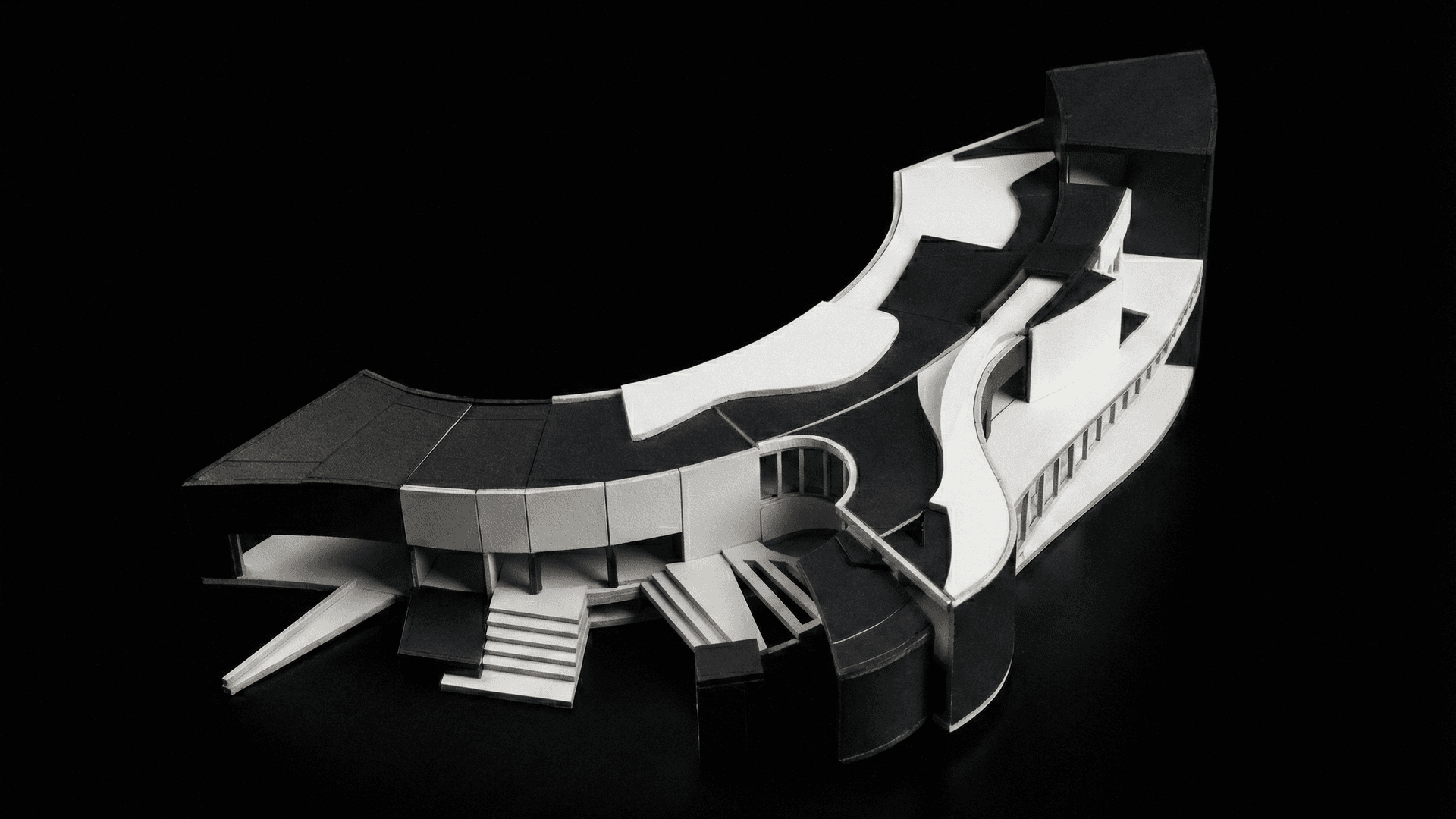
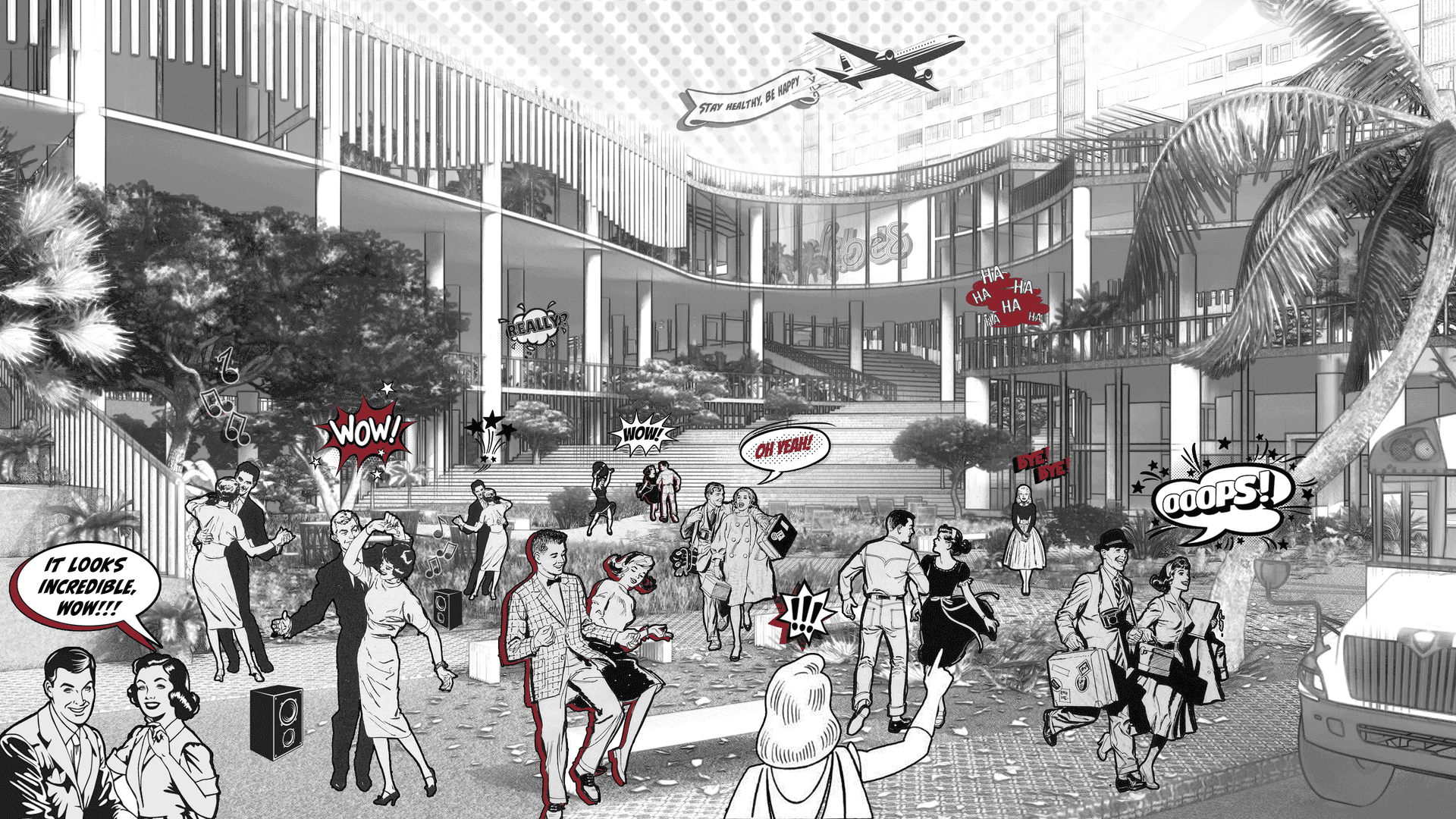
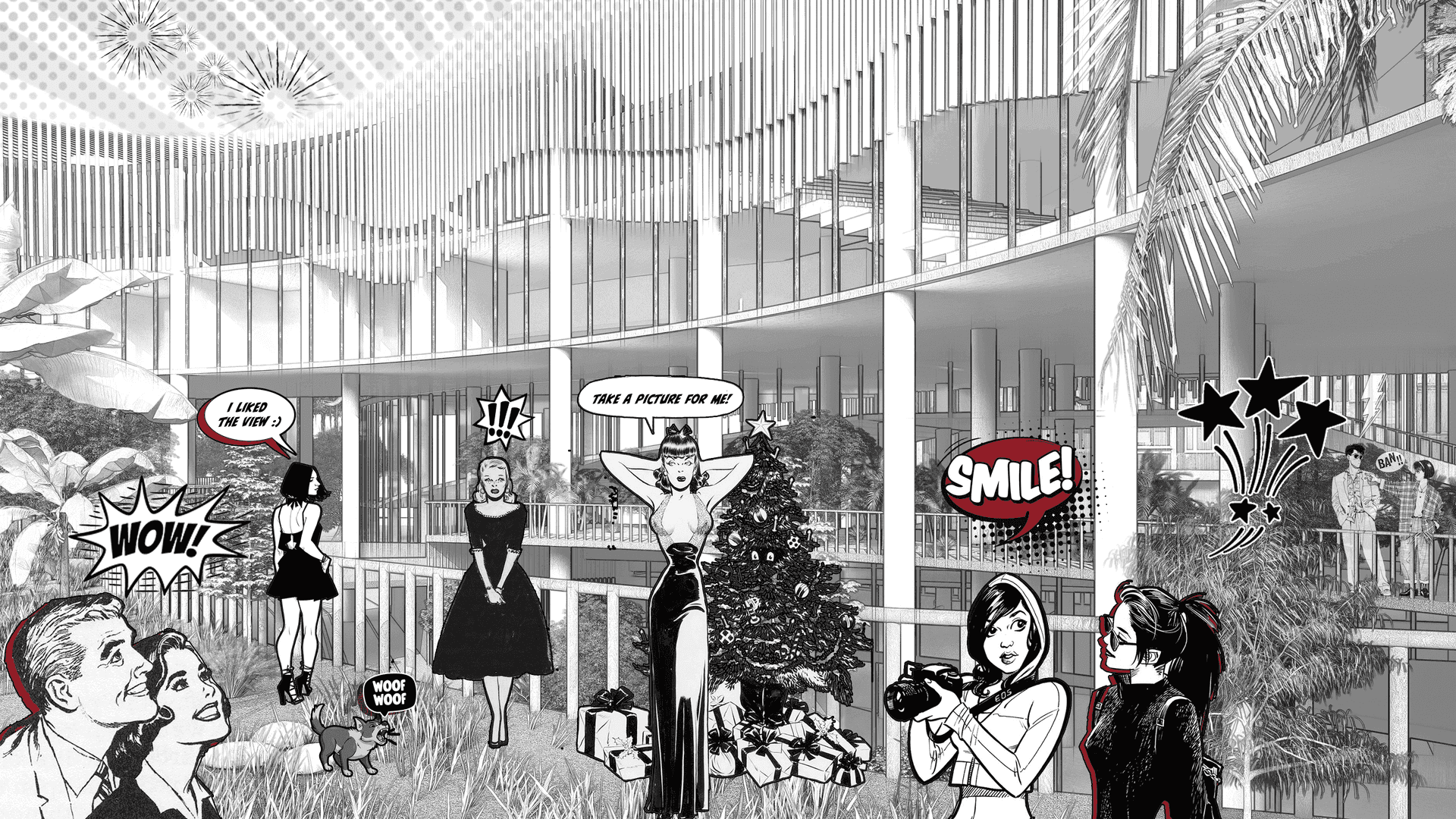
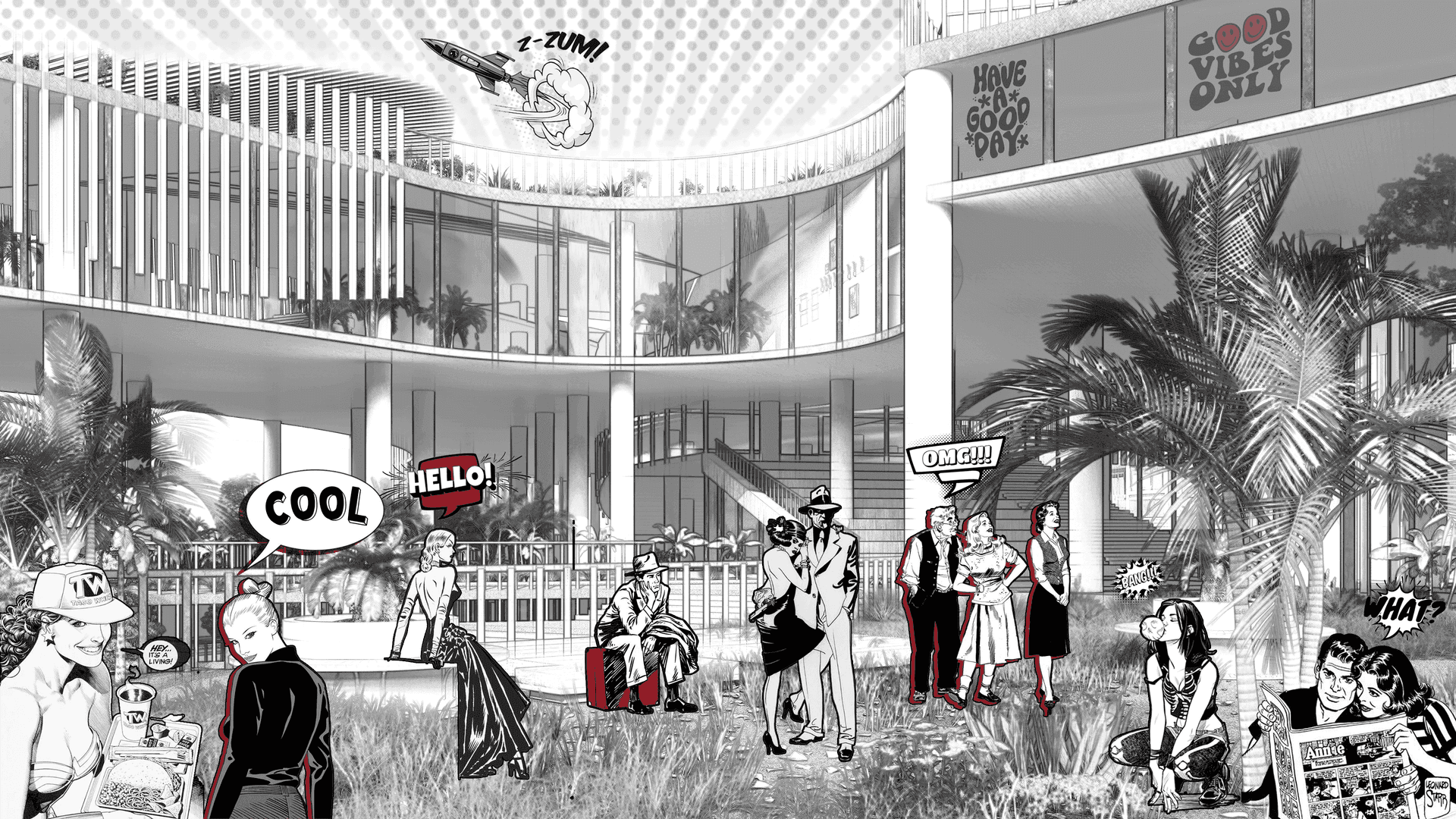
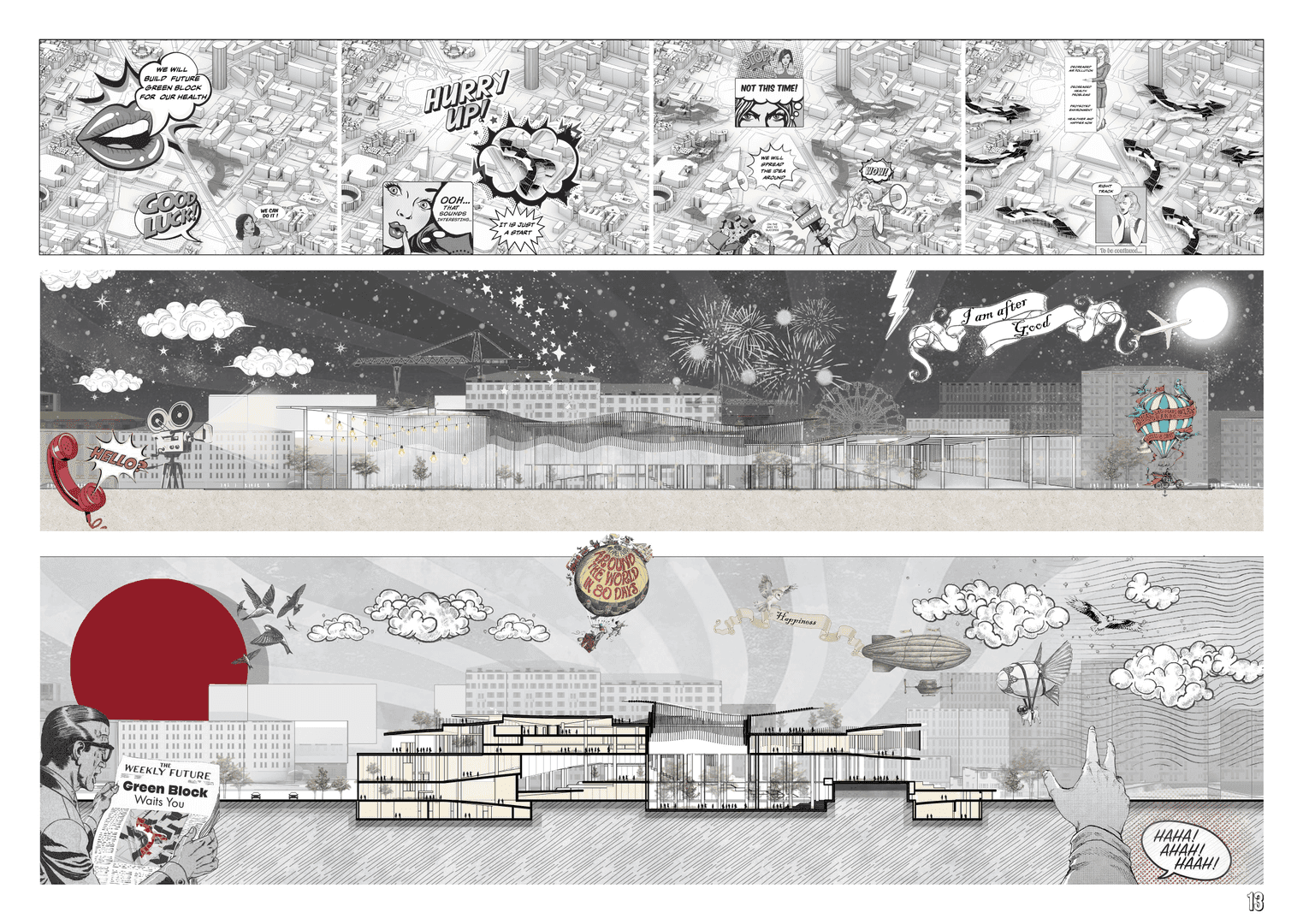
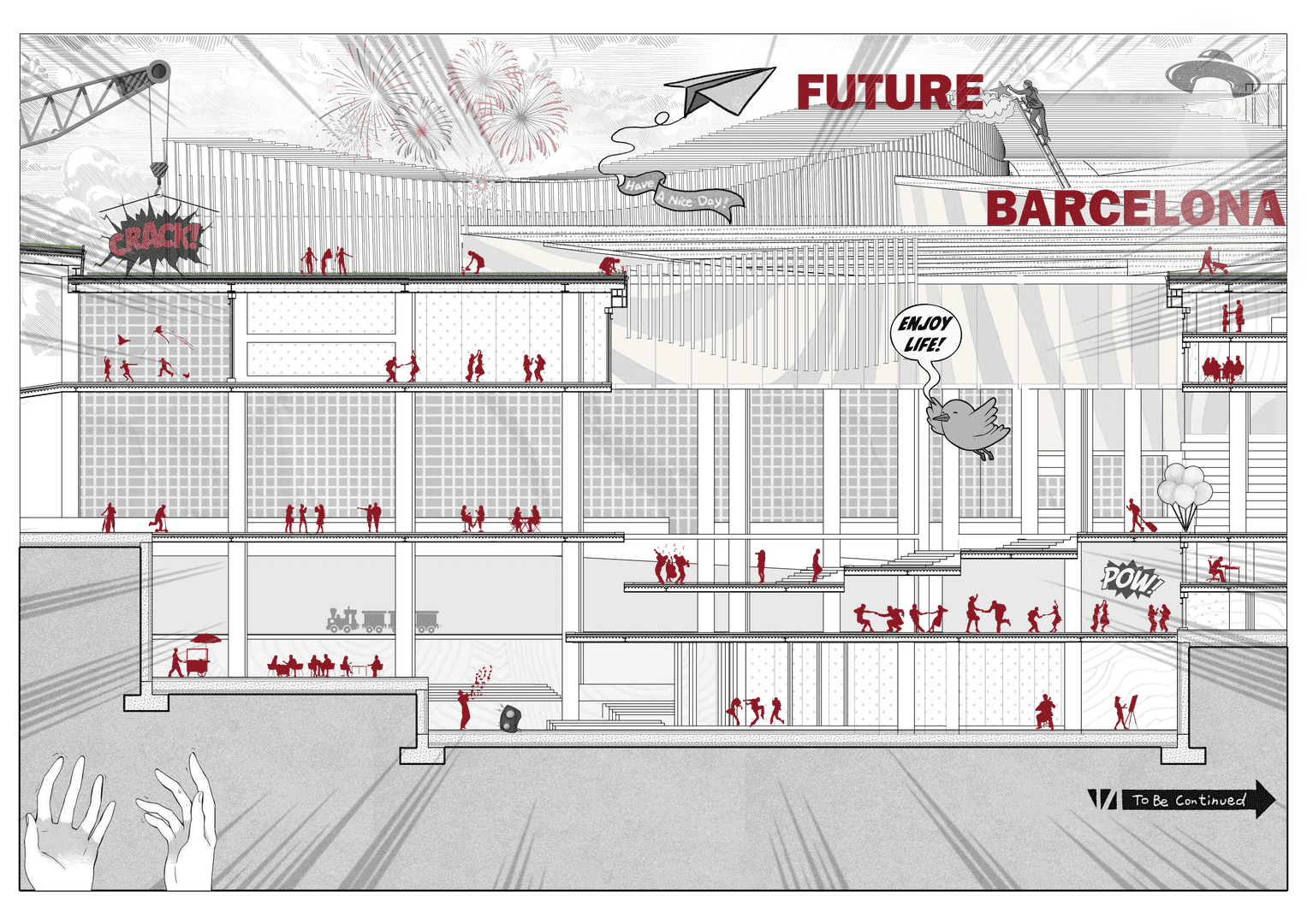
In this project; preventive care, research, education, food, movement, and social activity are integrated into a porous public framework, positioning the project as a social condenser within the city’s innovation ecosystem. The architectural strategy prioritizes green density over building mass.
Material Studies
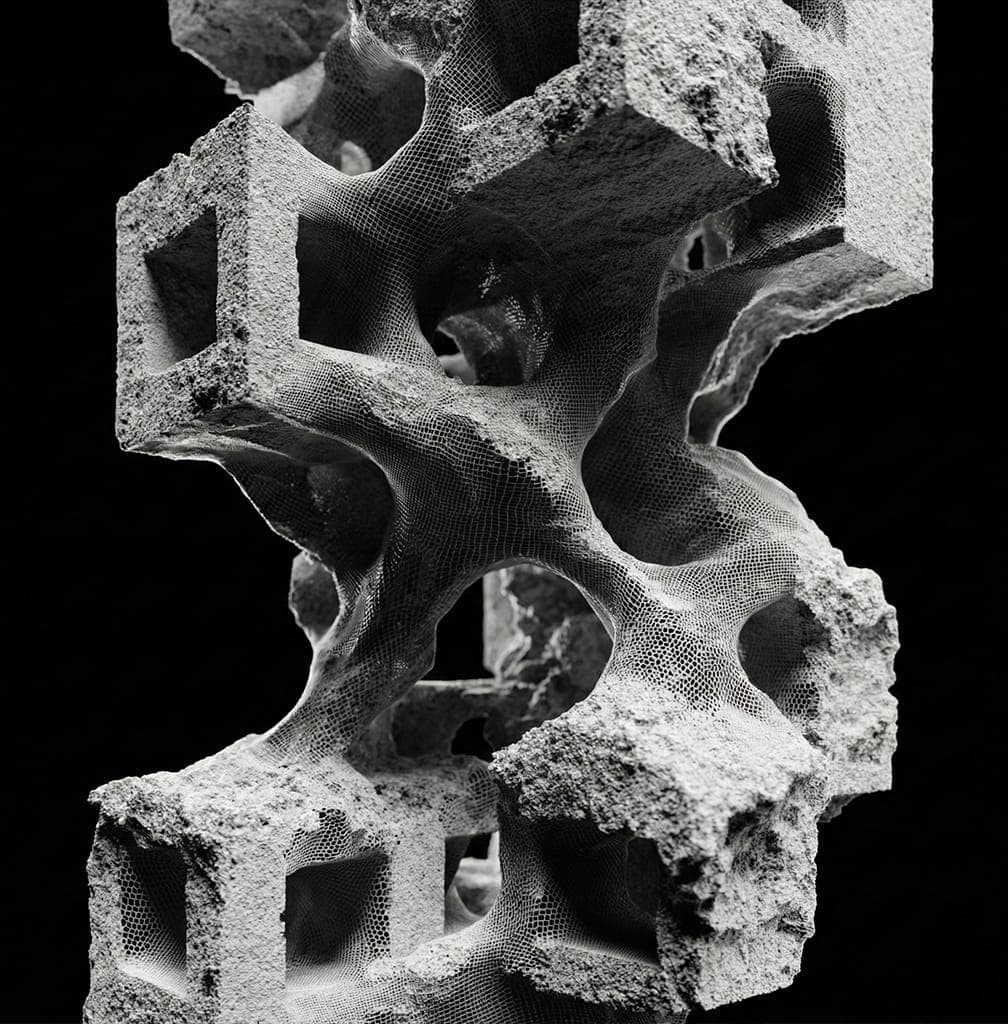
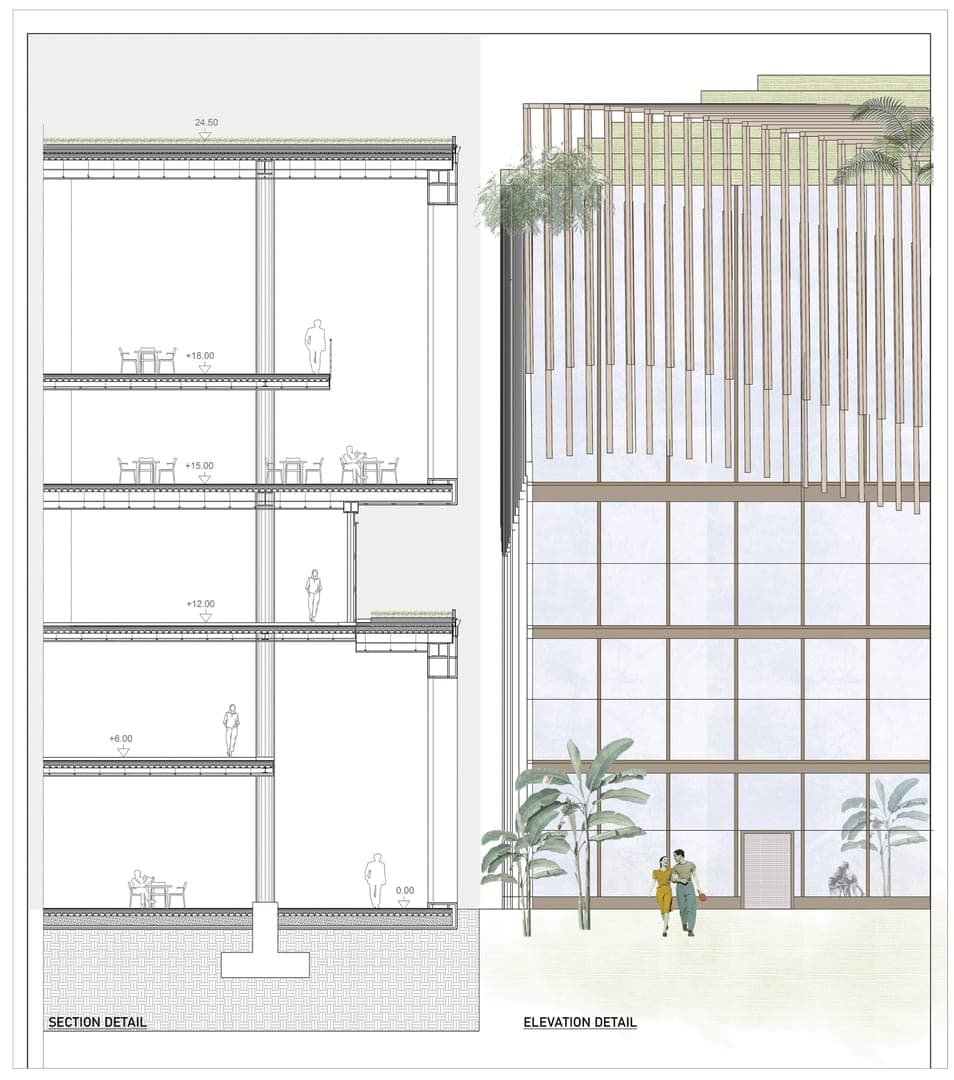
Material research and specification studies focusing on sustainable, biophilic material selection for wellness architecture. The green roof system is supported by steel columns and prarametric facade system which treats glass facade as subreakage for shading and ventilation.
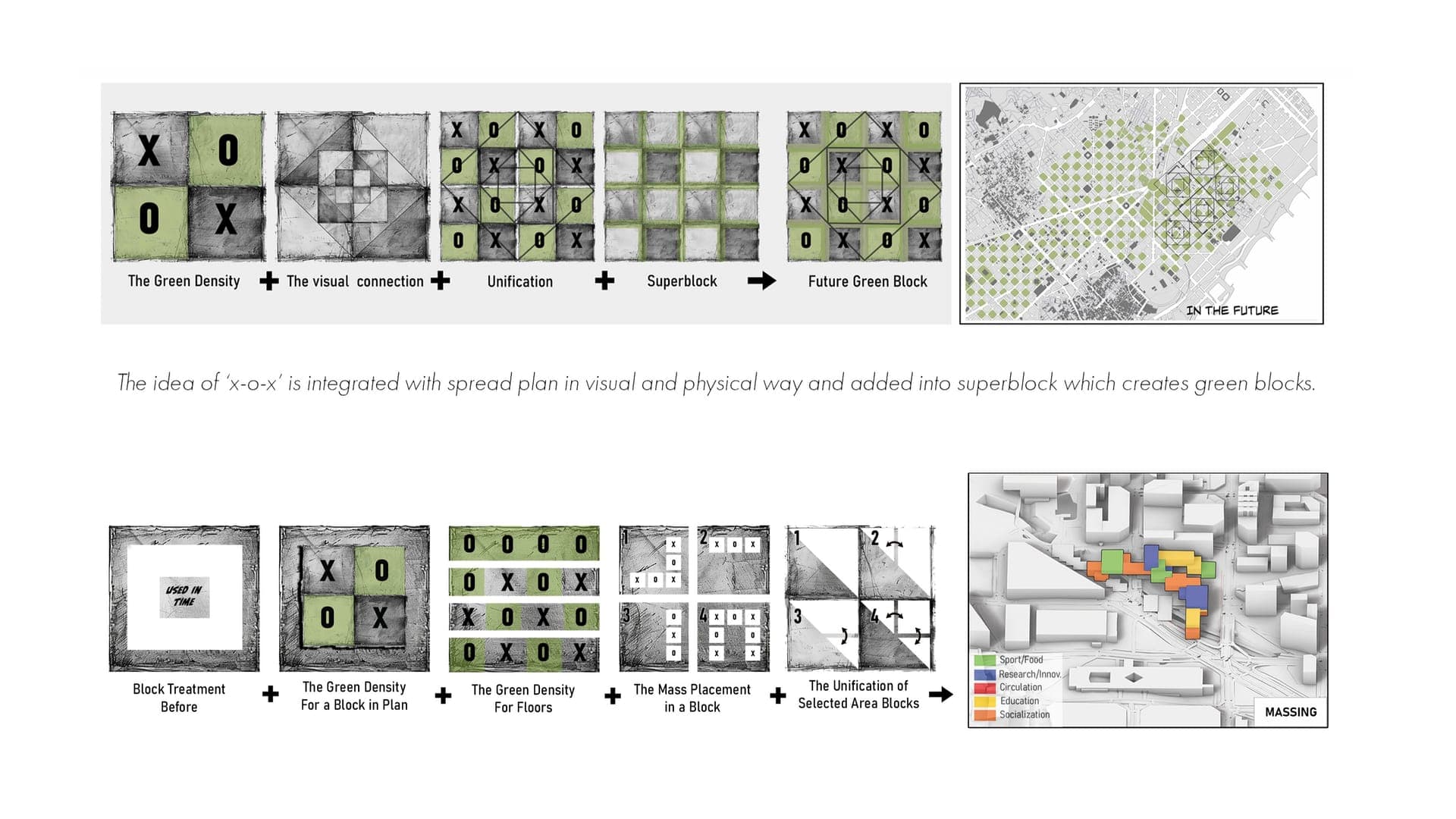
Green Density
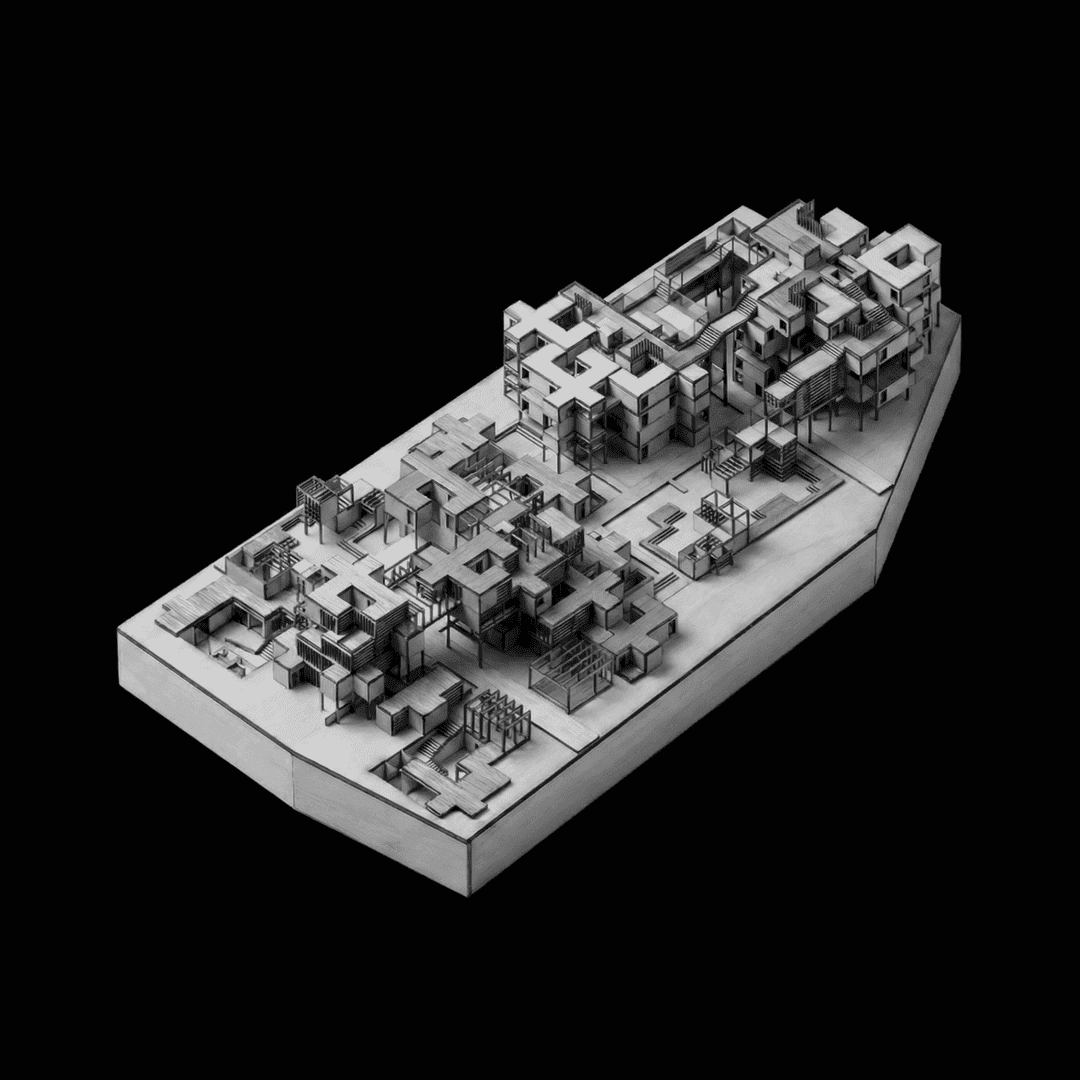
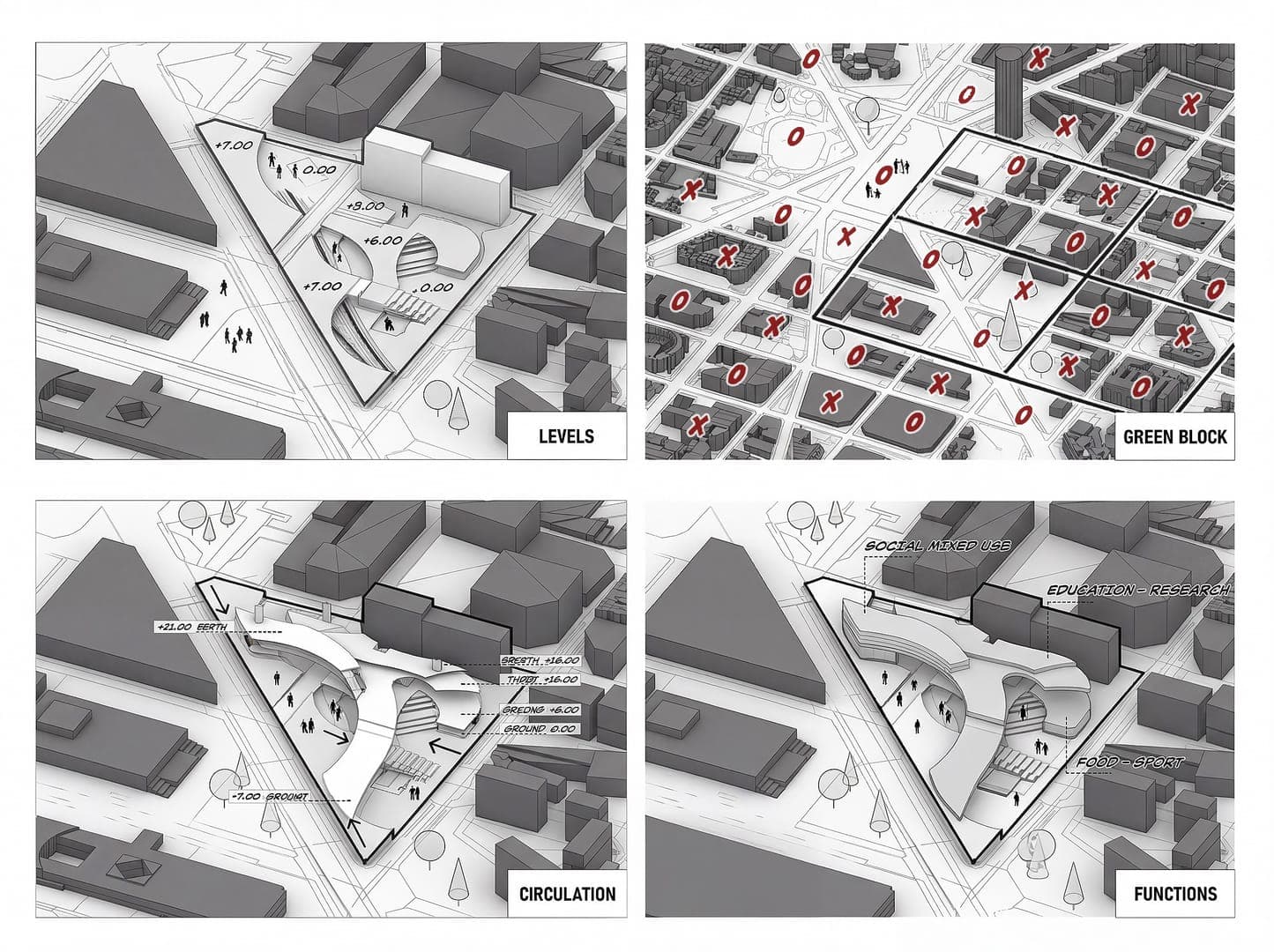
Using a flexible x-o logic, planted surfaces and built volumes are equally distributed, dissolving boundaries between landscape and architecture while allowing long-term adaptability.
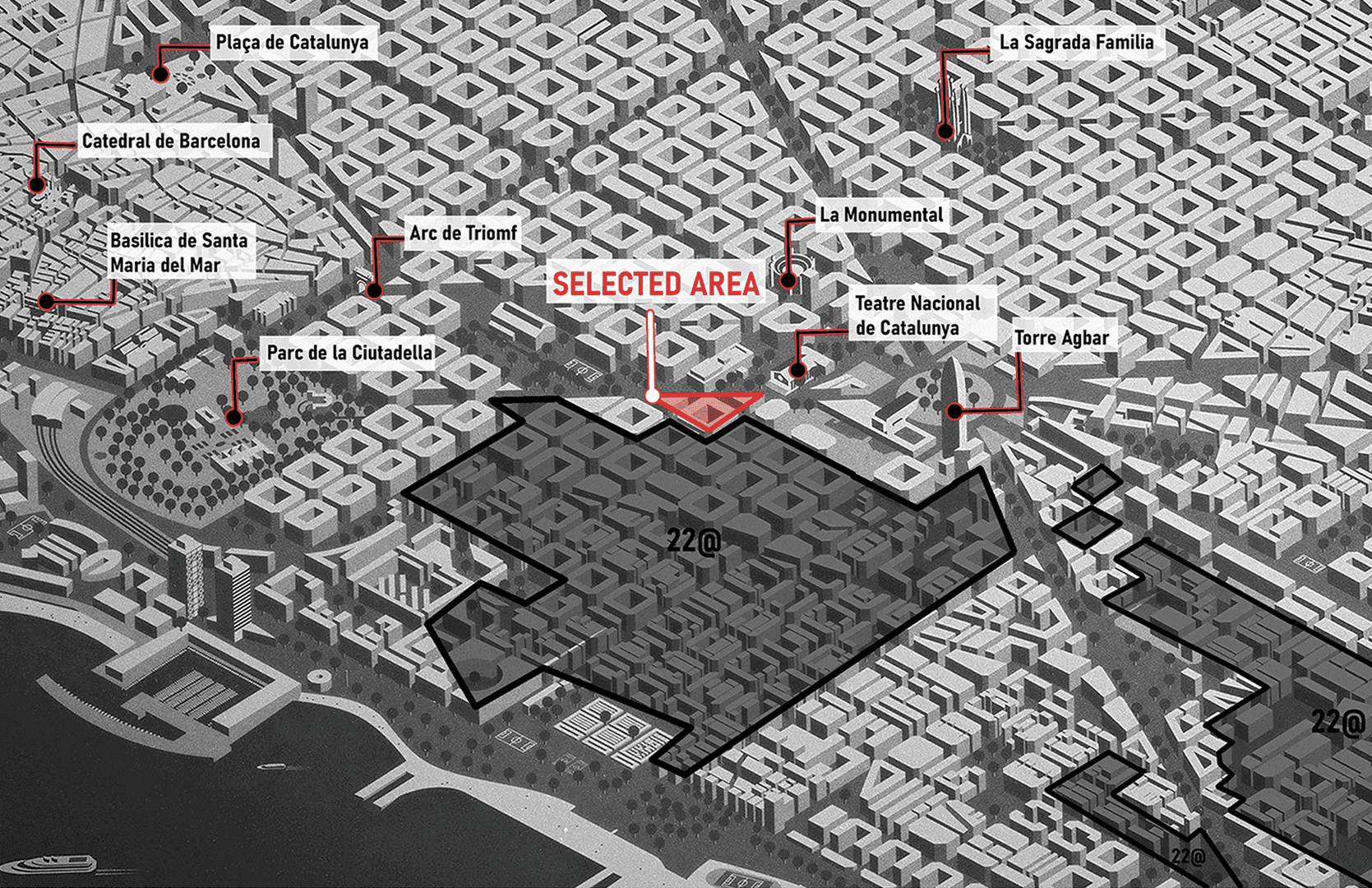
Location and Site Context
Located along Barcelona’s green axis near the 22@ district, the project transforms a developing park into an active interface between environmental infrastructure and public life.
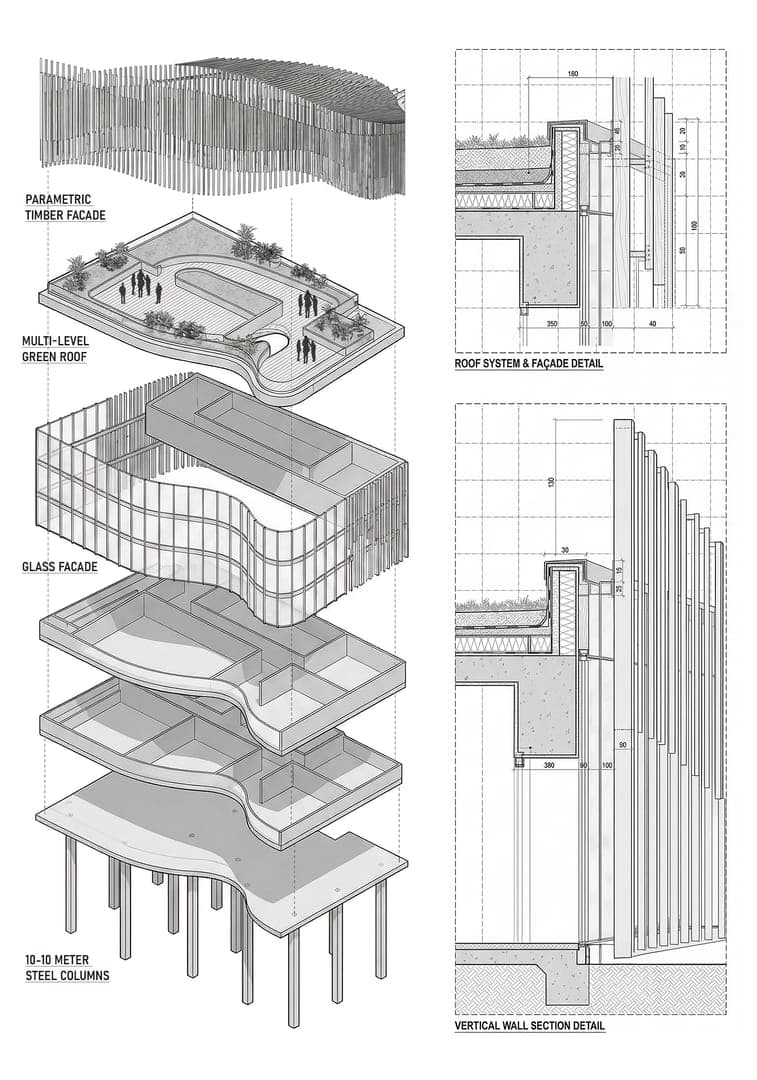
Technical Details
Inspired by forest ecologies, a rhythmic structural system and multi-level platforms create layered, open environments with publicly accessible green roofs.
Massing
Mass and density are the main parameters of the project. The project is designed to be a green density project with a high density of green spaces and a low density of buildings.
Public Spaces
Dynamic public spaces that encourage community interaction and wellness activities.
Wizard of Well-Being
AI-assisted health systems and digital monitoring are subtly embedded, supporting personalized wellness without dominating space. The project positions architecture as a responsive, evolving framework shaped by users, ecology, and time.