Floresomatic
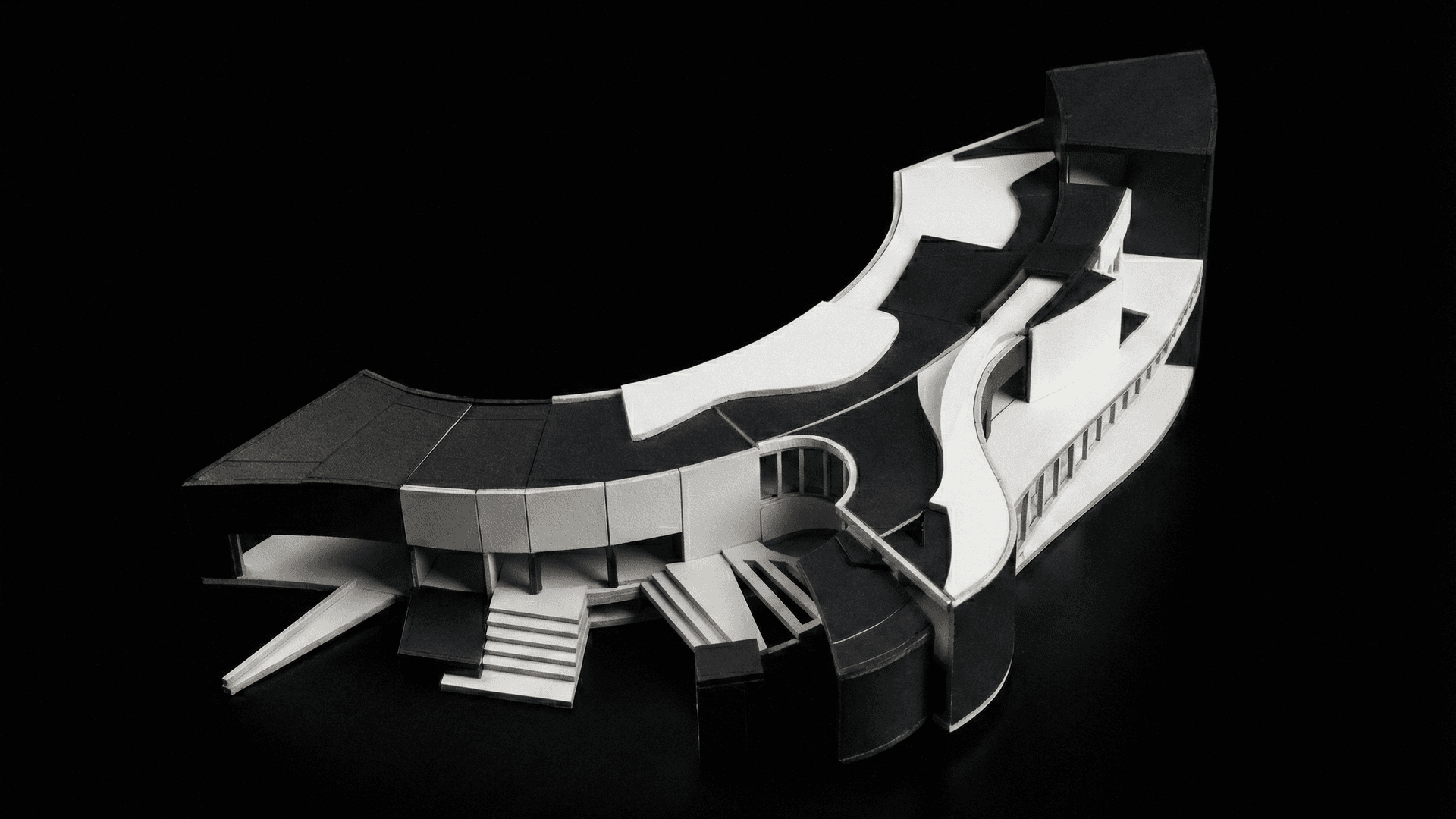
AI-driven Architectural Intelligence Studio Project exploring cyber-physical design systems
Outcome
UCLA Architectural Intelligence Studio Project- IAAC Barcelona 2051 Registered Participant
Scope
- —AI integration
- —AI workflows
- —Data-driven design
Tools
Methods
Project Overview
Contemporary farming as a gamified cyber-physical system that trains ecological consciousness.
Site and Context
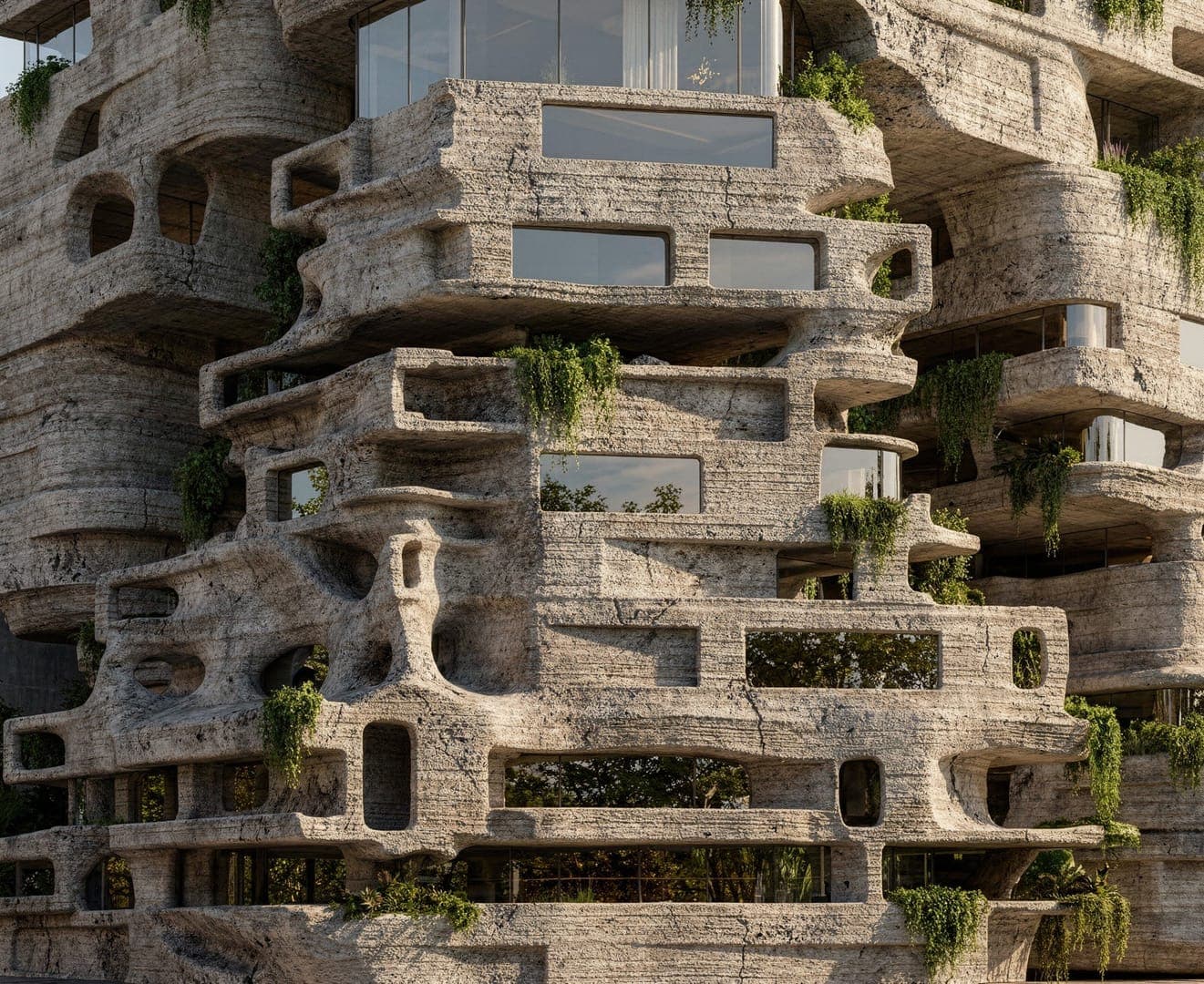
Site analysis and contextual study of the project's urban location and its relationship to the surrounding environment.
Urban Context
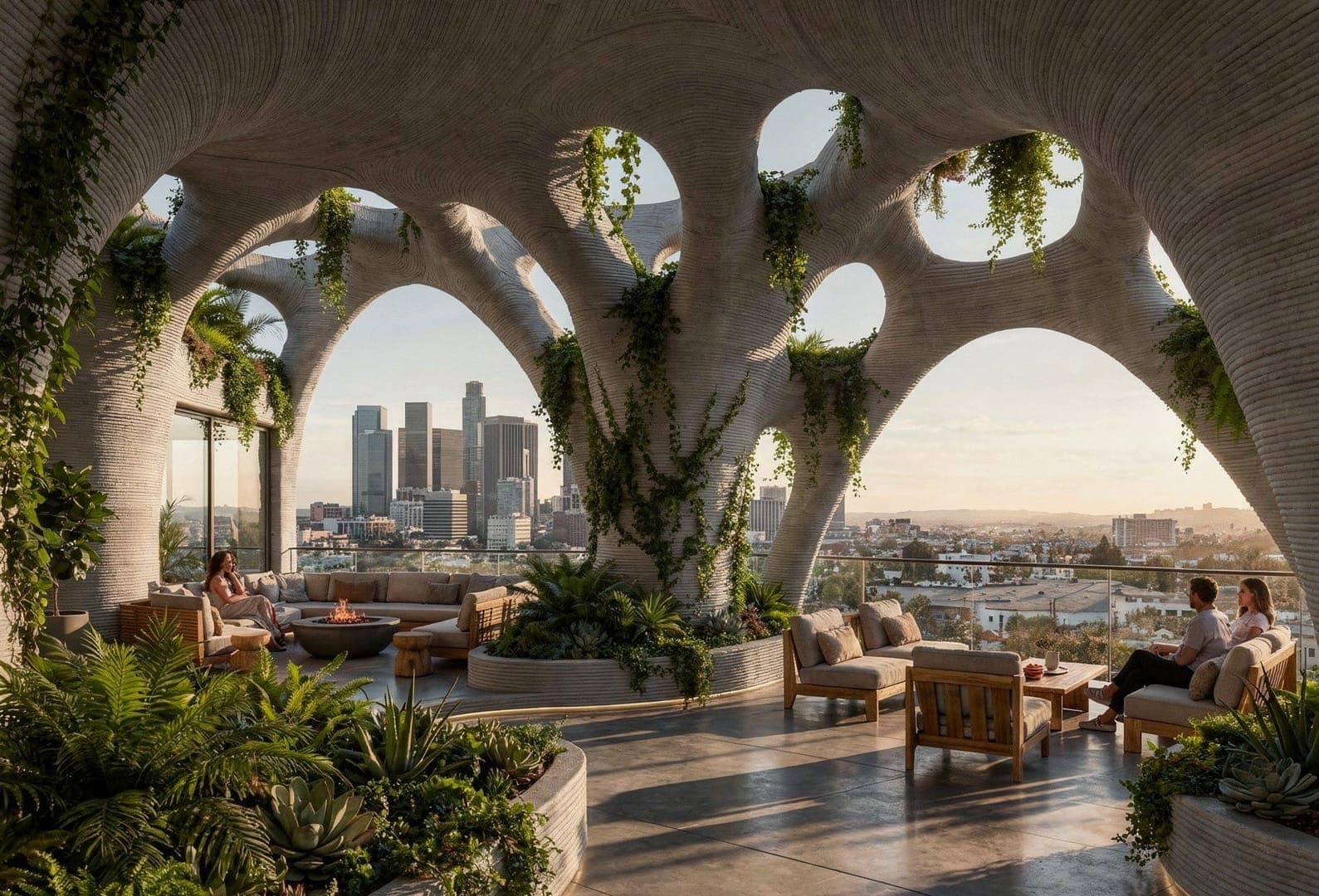
Urban context and environmental studies exploring the project's integration within the city fabric.
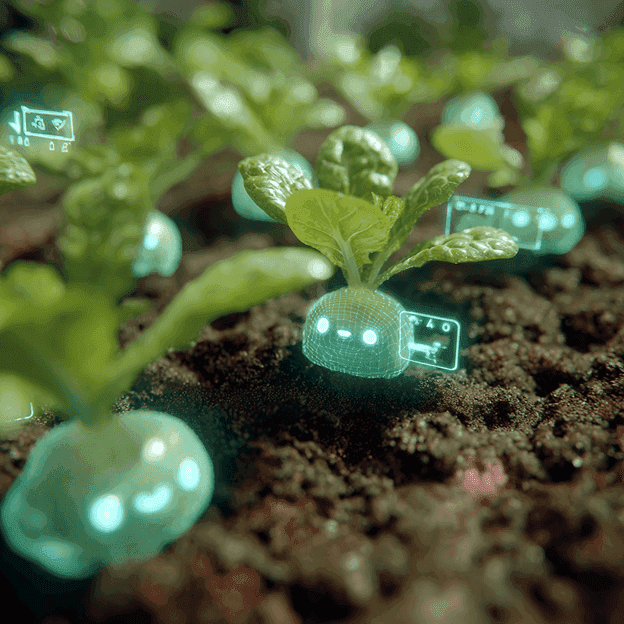
Design Concept
Conceptual framework for cyber-physical farming systems integrated with co-living architecture.
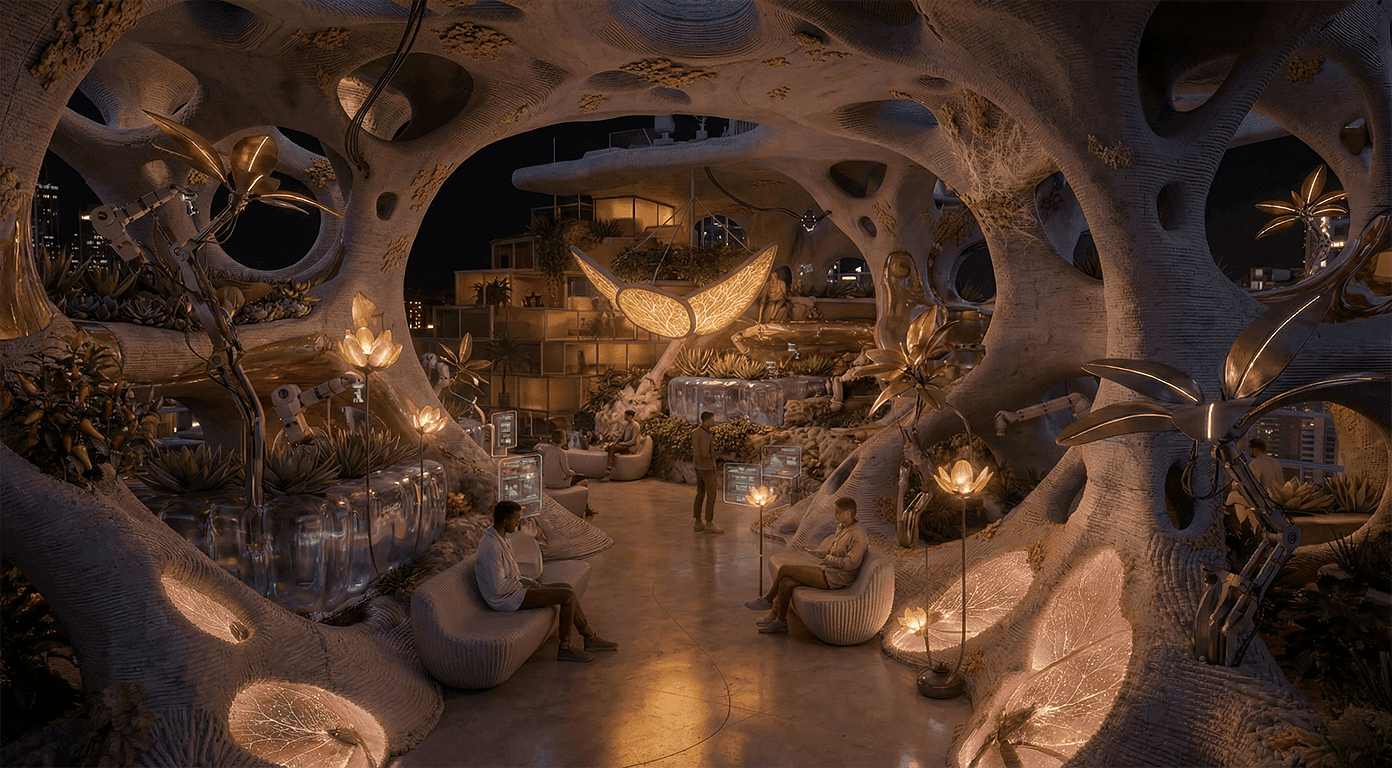
AI Integration
Using AI to generate design alternatives, create cyber-physical systems and optimize the design process.
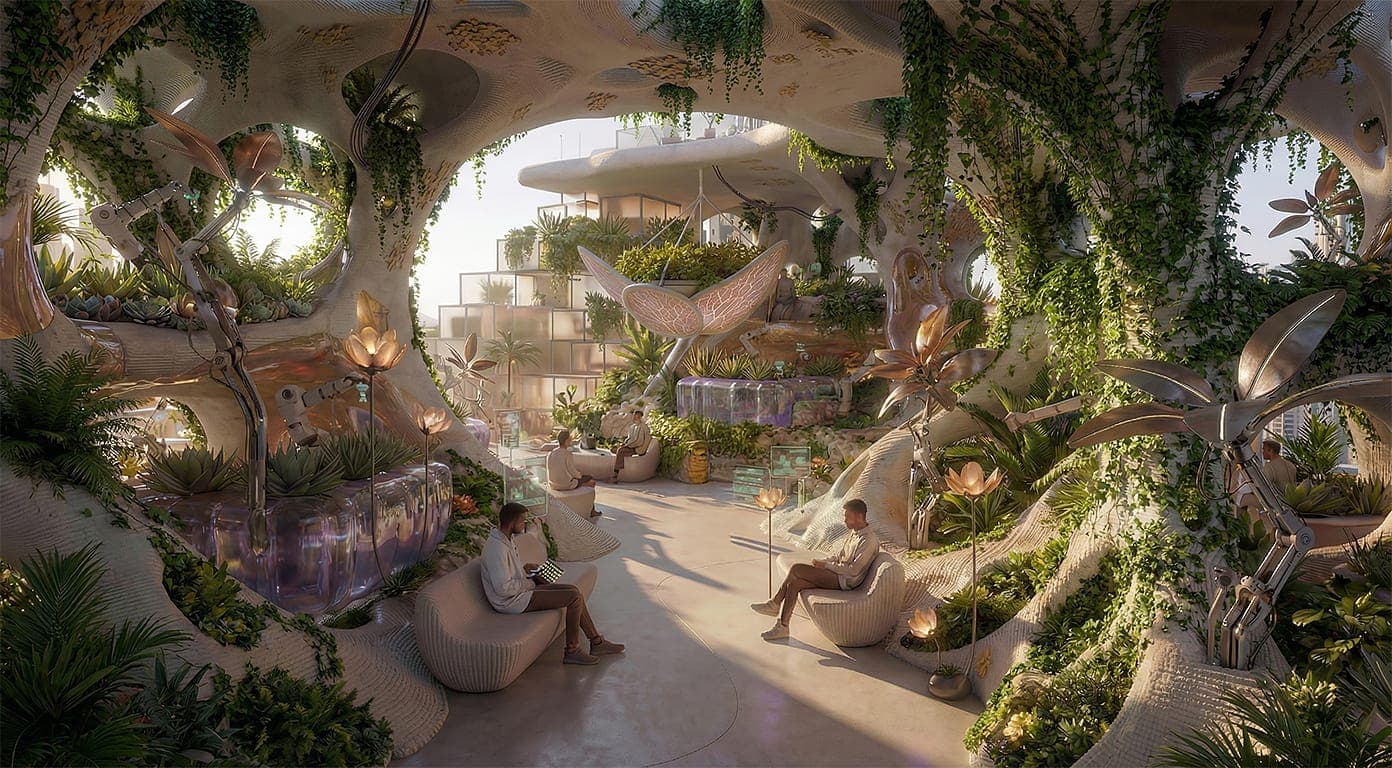
Co-Living as Farming Organism
To train ecological consciousness through gamification of contemporary farming practices.
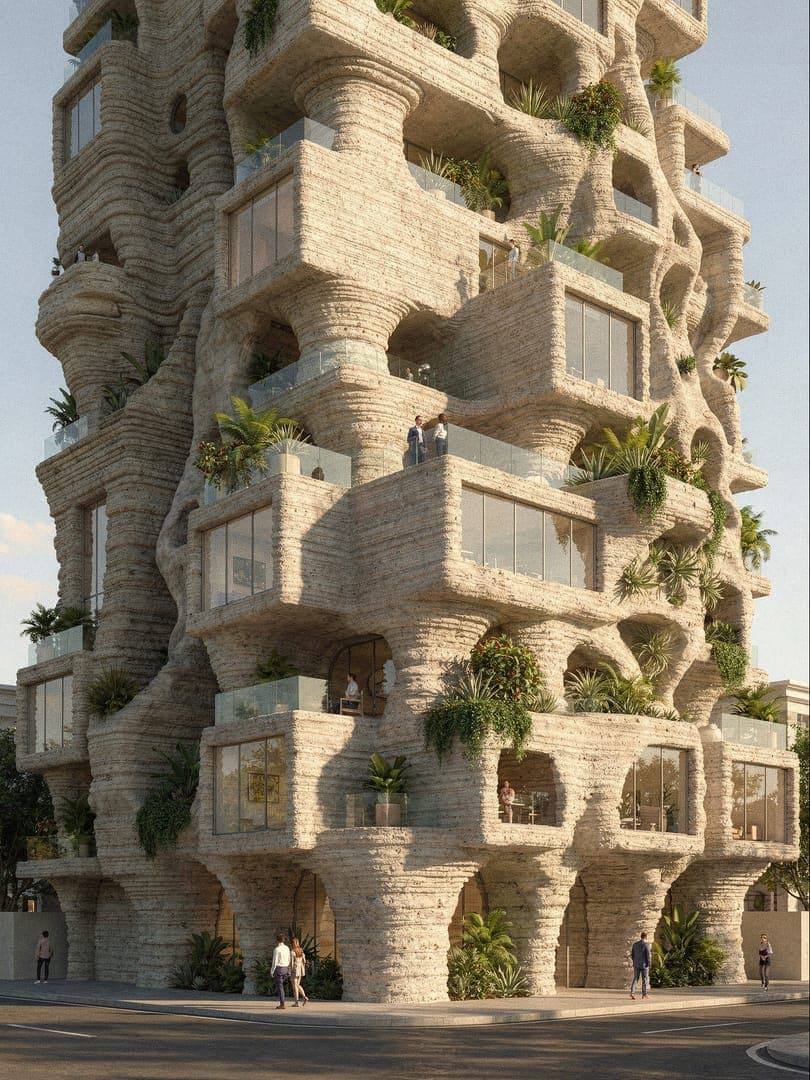
Plant Palette
A symbiotic plant ecology of rare species organizes the co-living unit into healing spatial gradients.
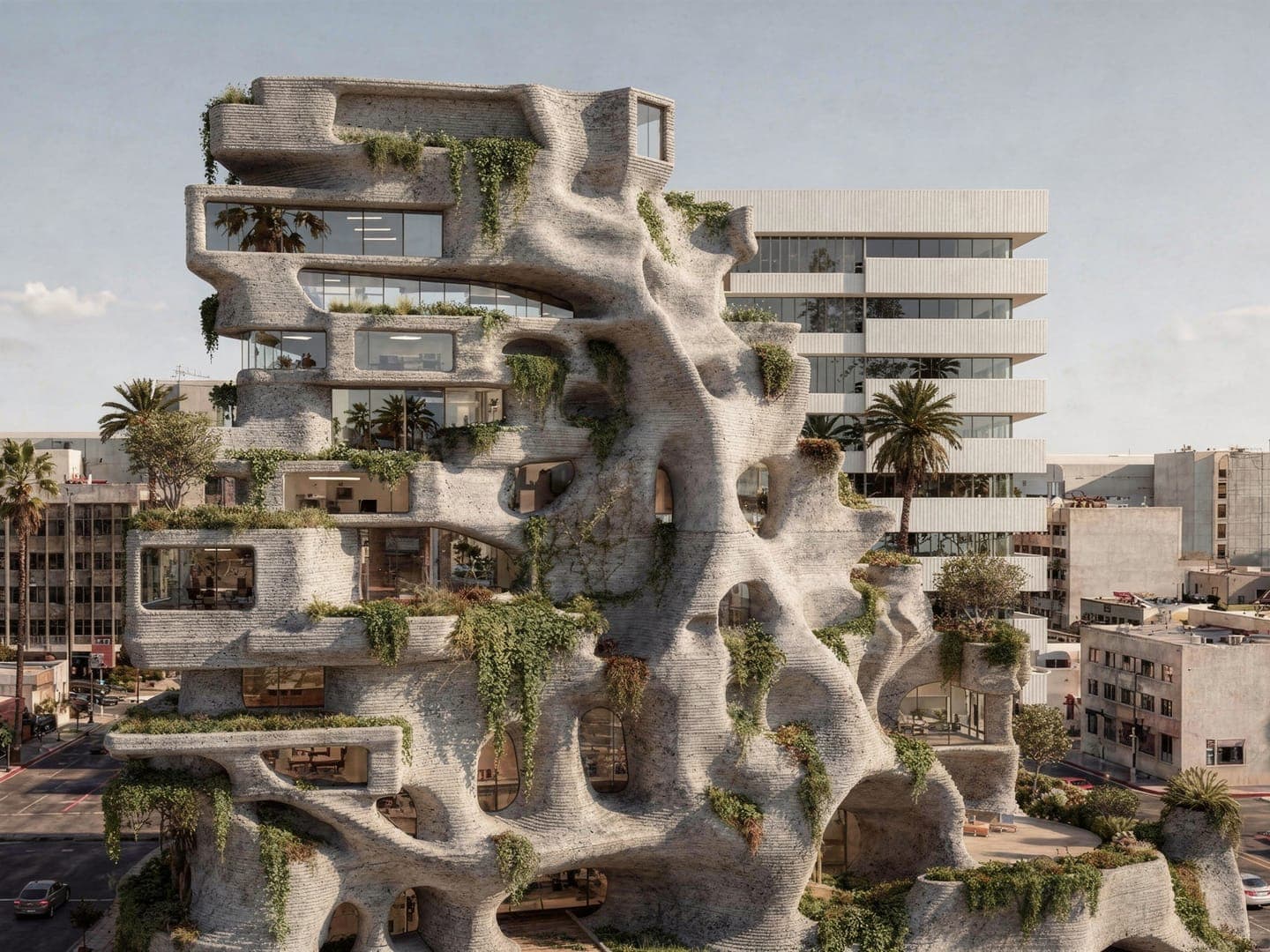
Plant Ecology
Detailed plant ecology studies exploring the integration of rare species within the co-living farming system.
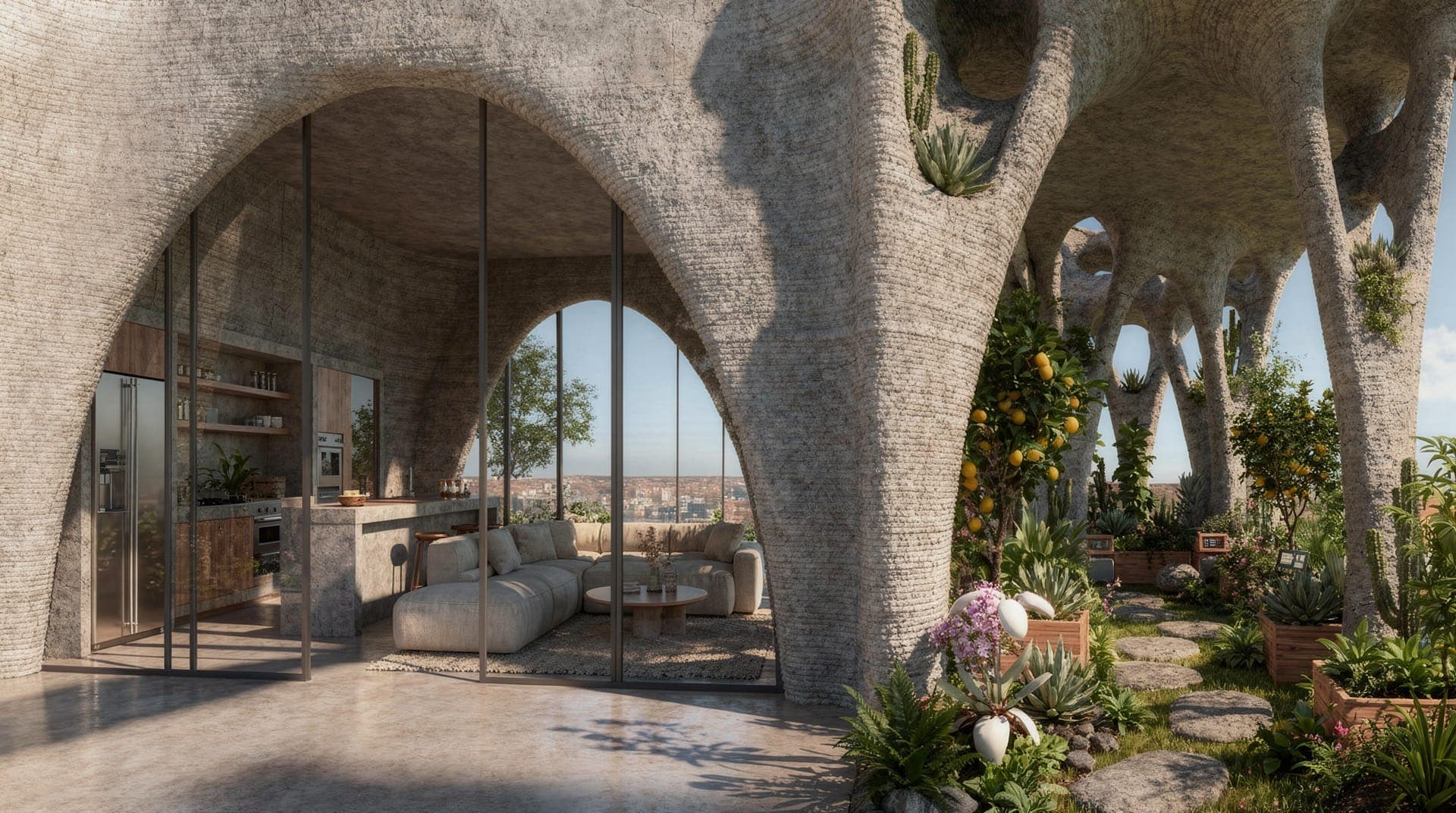
Farming Integration
Farming integration strategies within the architectural system connecting residents to the natural ecosystem.
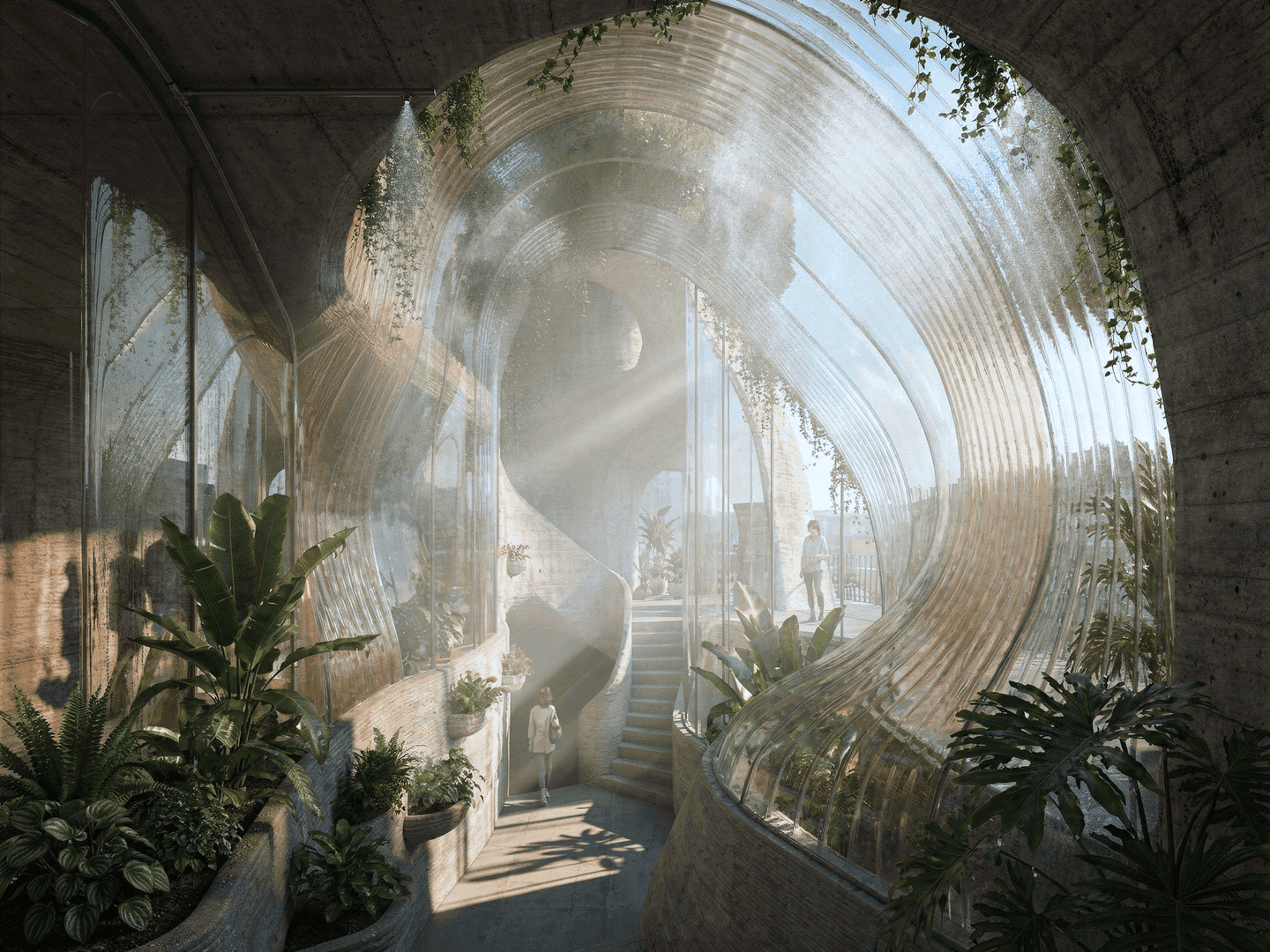
Ecological Gradients
Ecological gradient studies showing how plant systems transition across different spatial zones of the co-living unit.
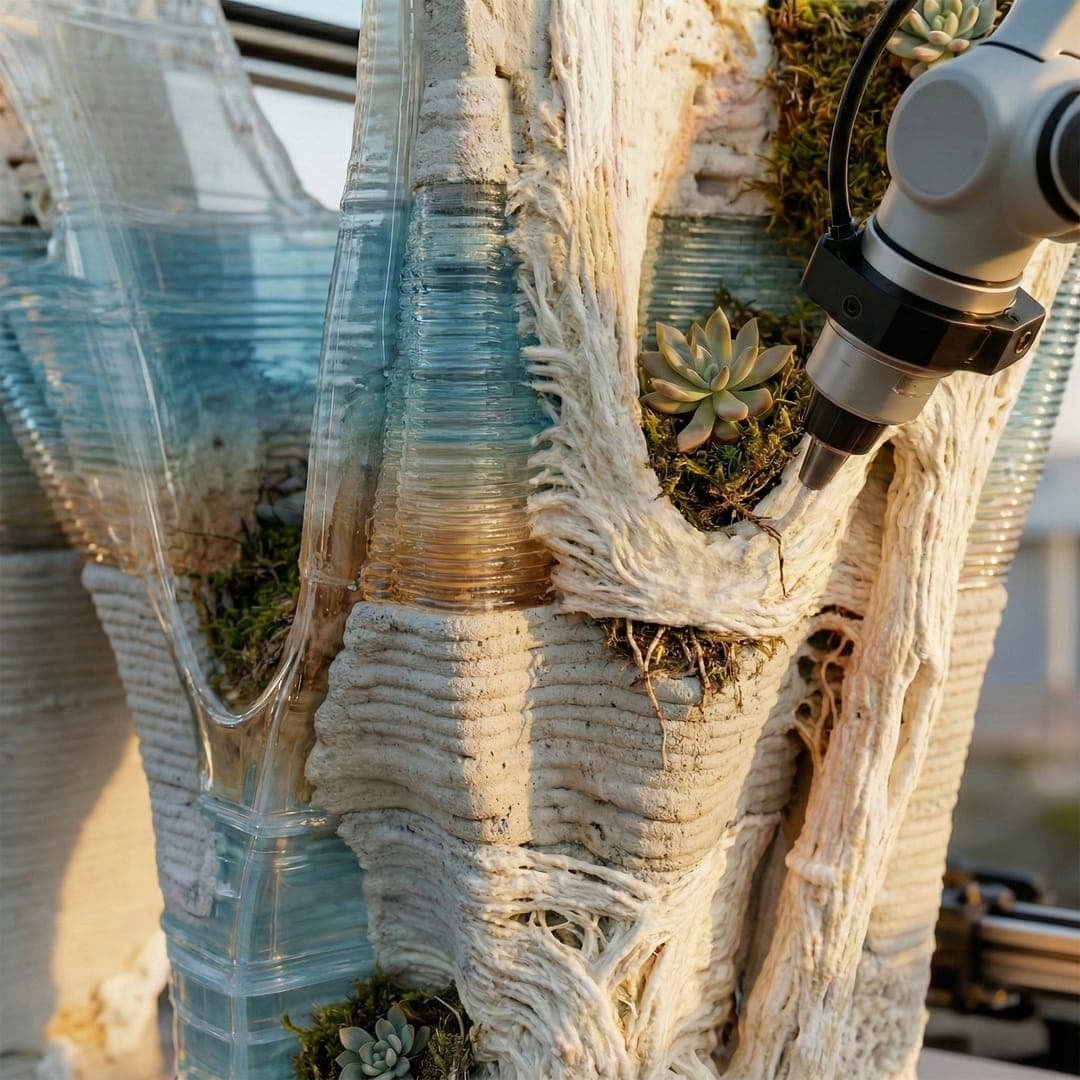
3D Printed Architecture
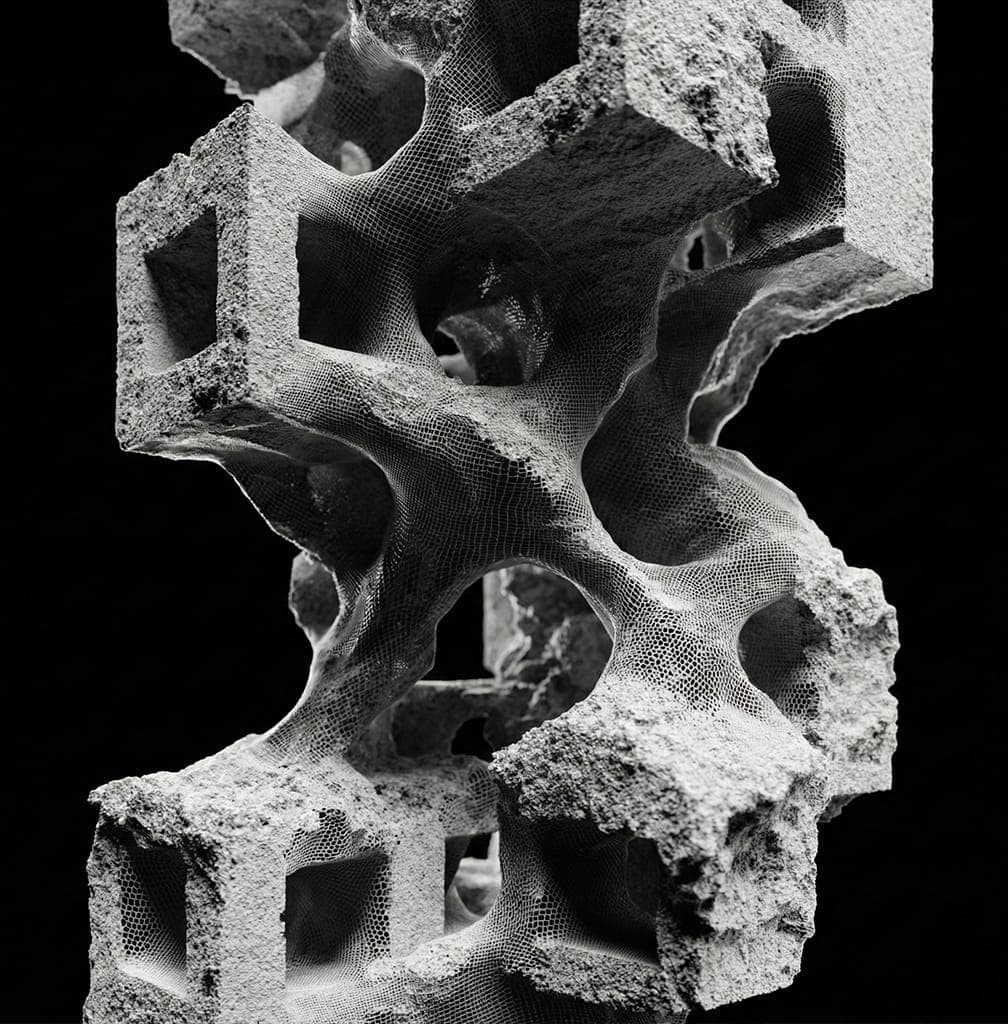
Physical manifestation of cyber-physical farming systems through 3D printing technology. Fixed modular dwellings are slowly woven together by robot-printed, organic farming tissue.
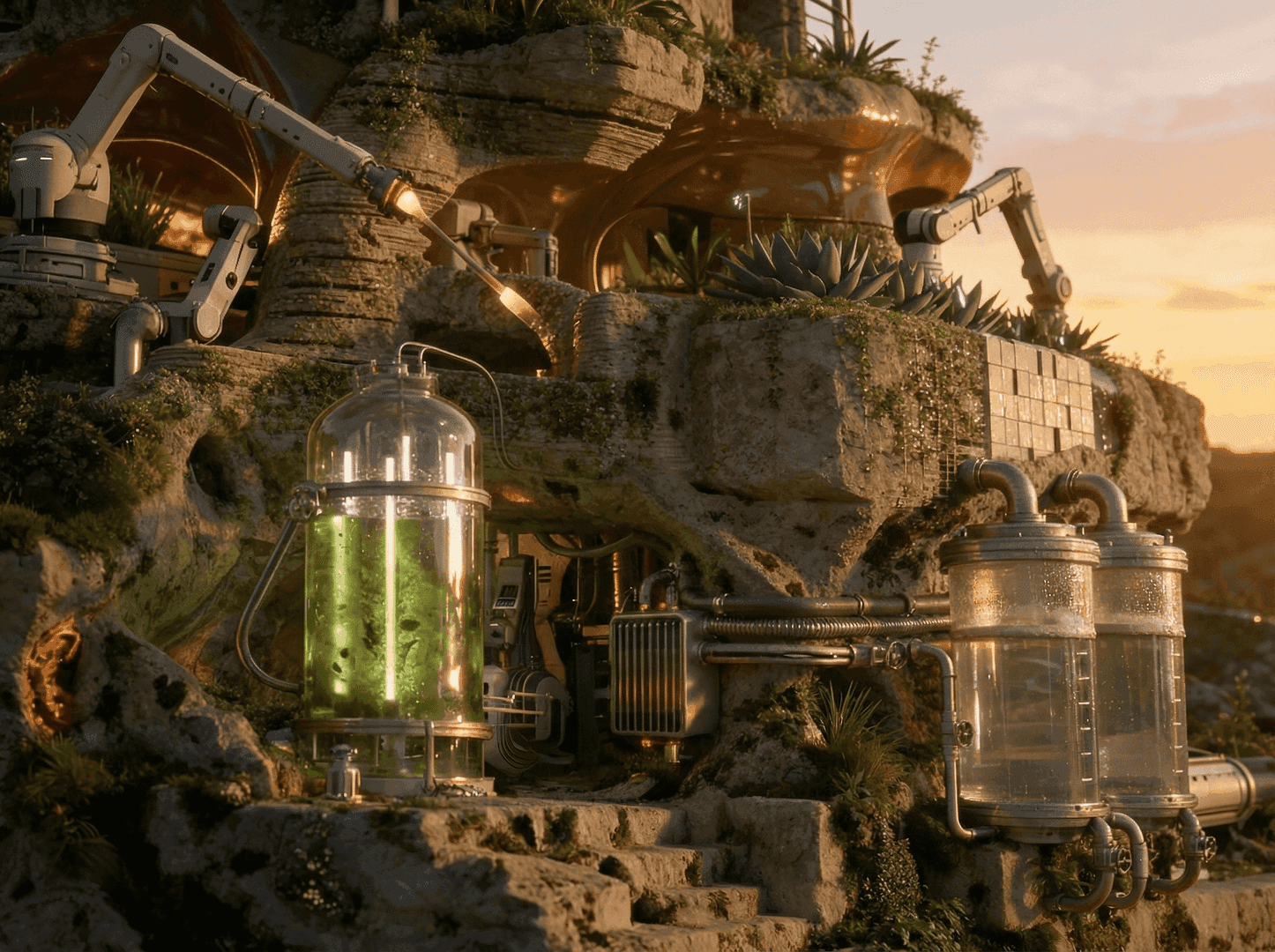
Growth and Expansion
Participation in farming directly drives architectural change through robotic fabrication systems.
Robotic Fabrication
Robotic fabrication processes enabling the dynamic growth and evolution of the architectural farming tissue.
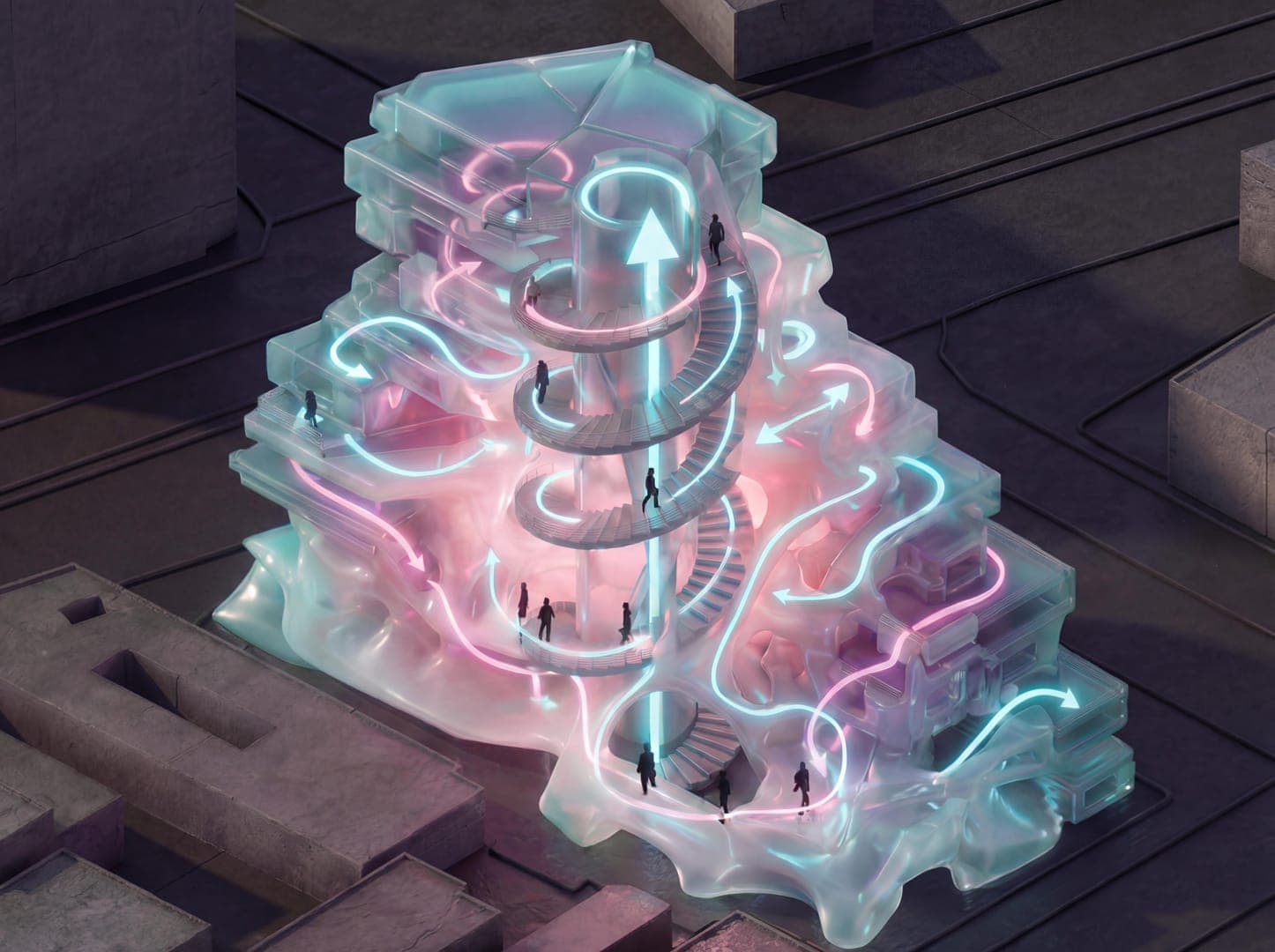
Circulation System
The system intentionally routes residents through shared farming areas before reaching their units.
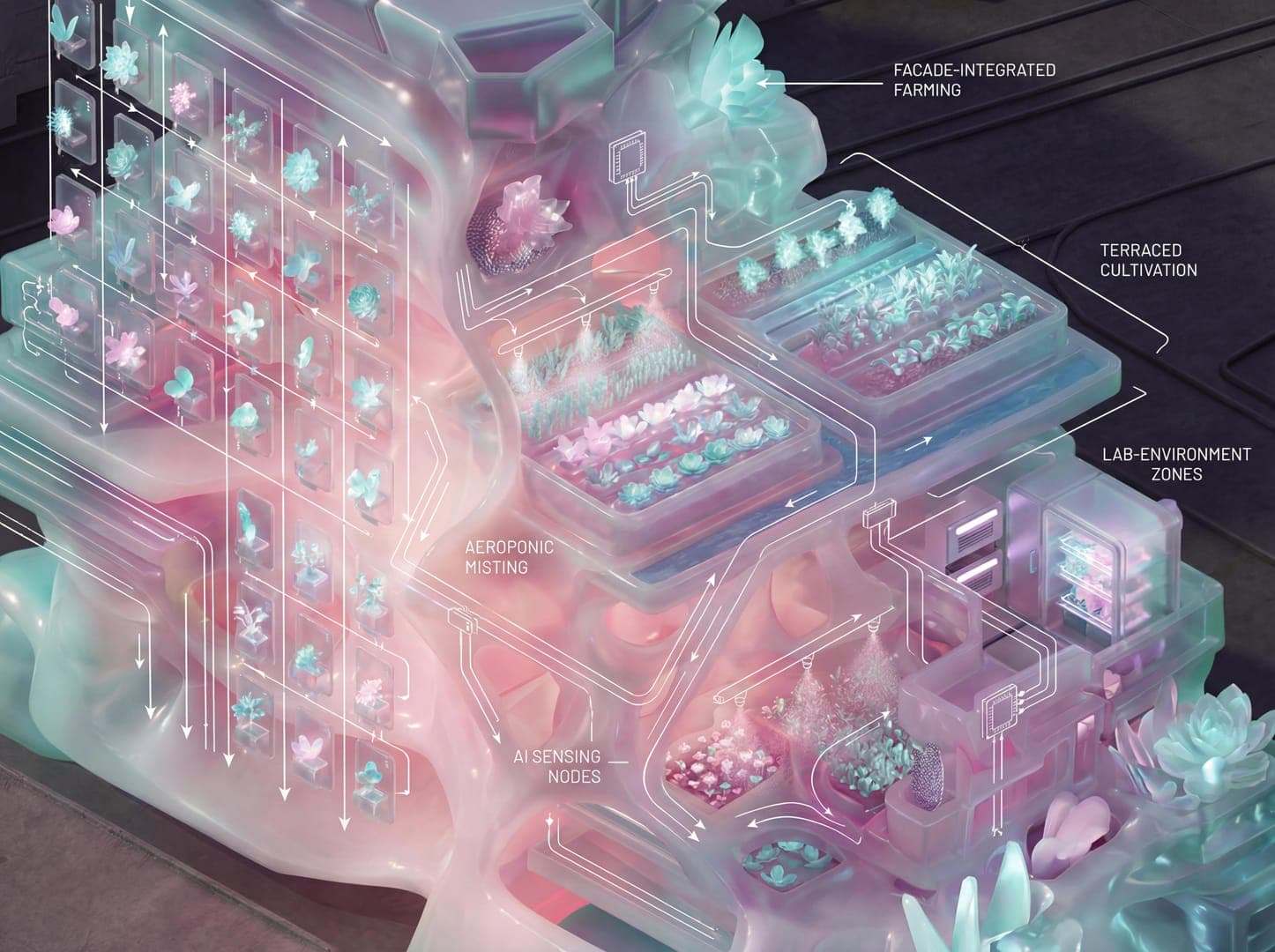
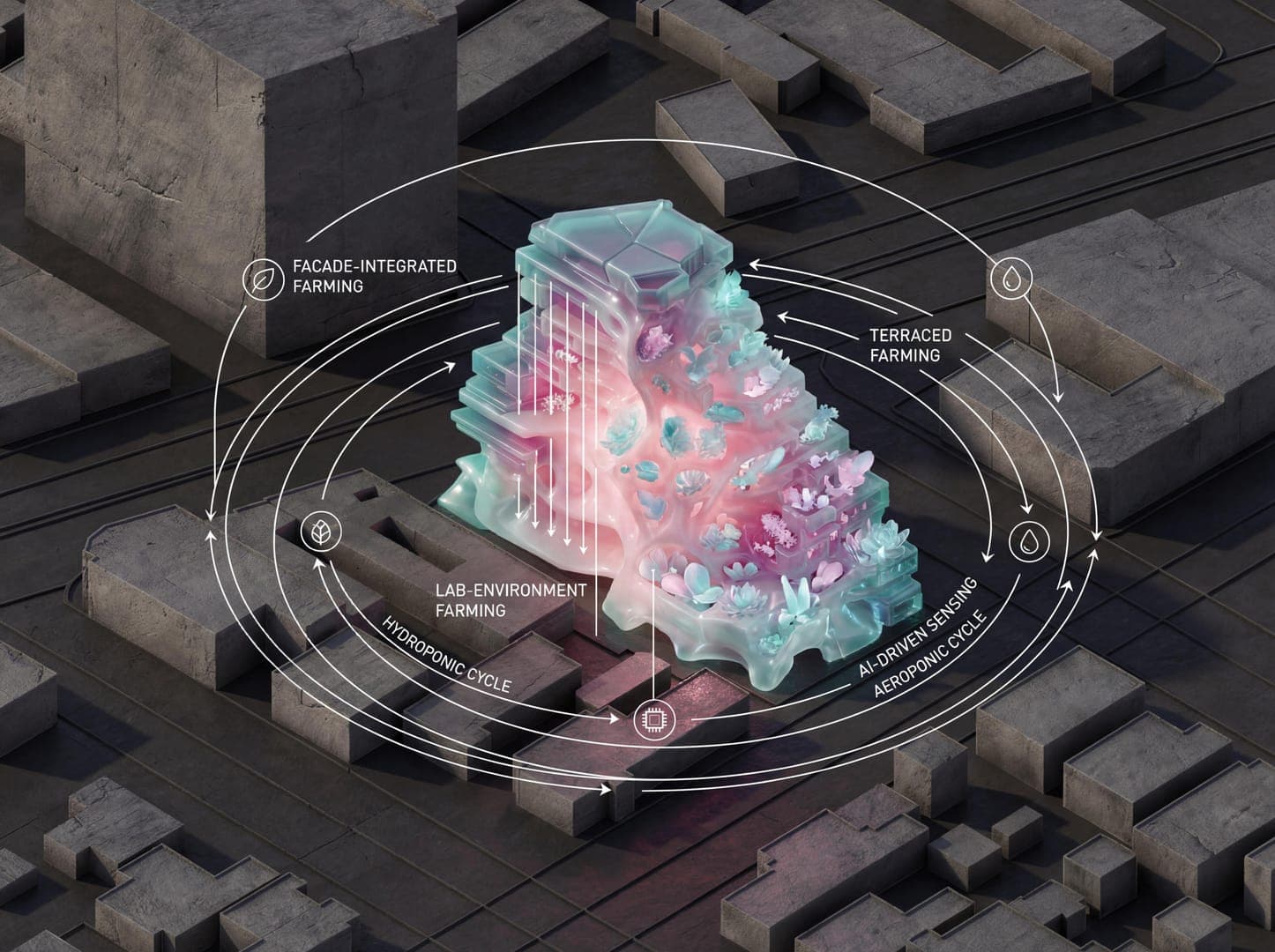
Farming Variations
Three spatial strategies are proposed for farming: large-scale, open-air crops integrated into terraces.
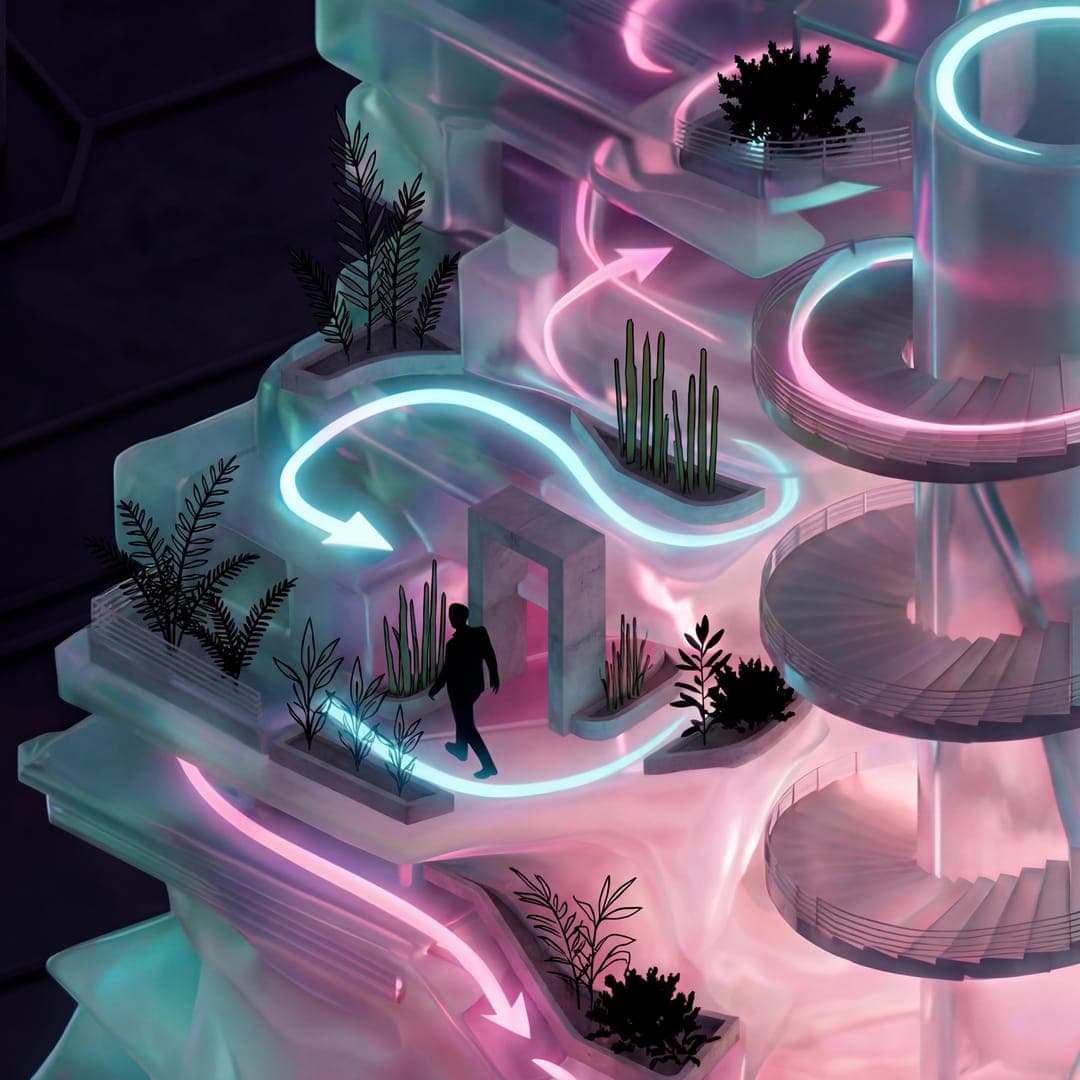
Spatial Flow
Spatial flow studies examining how residents move through and interact with the farming environment.
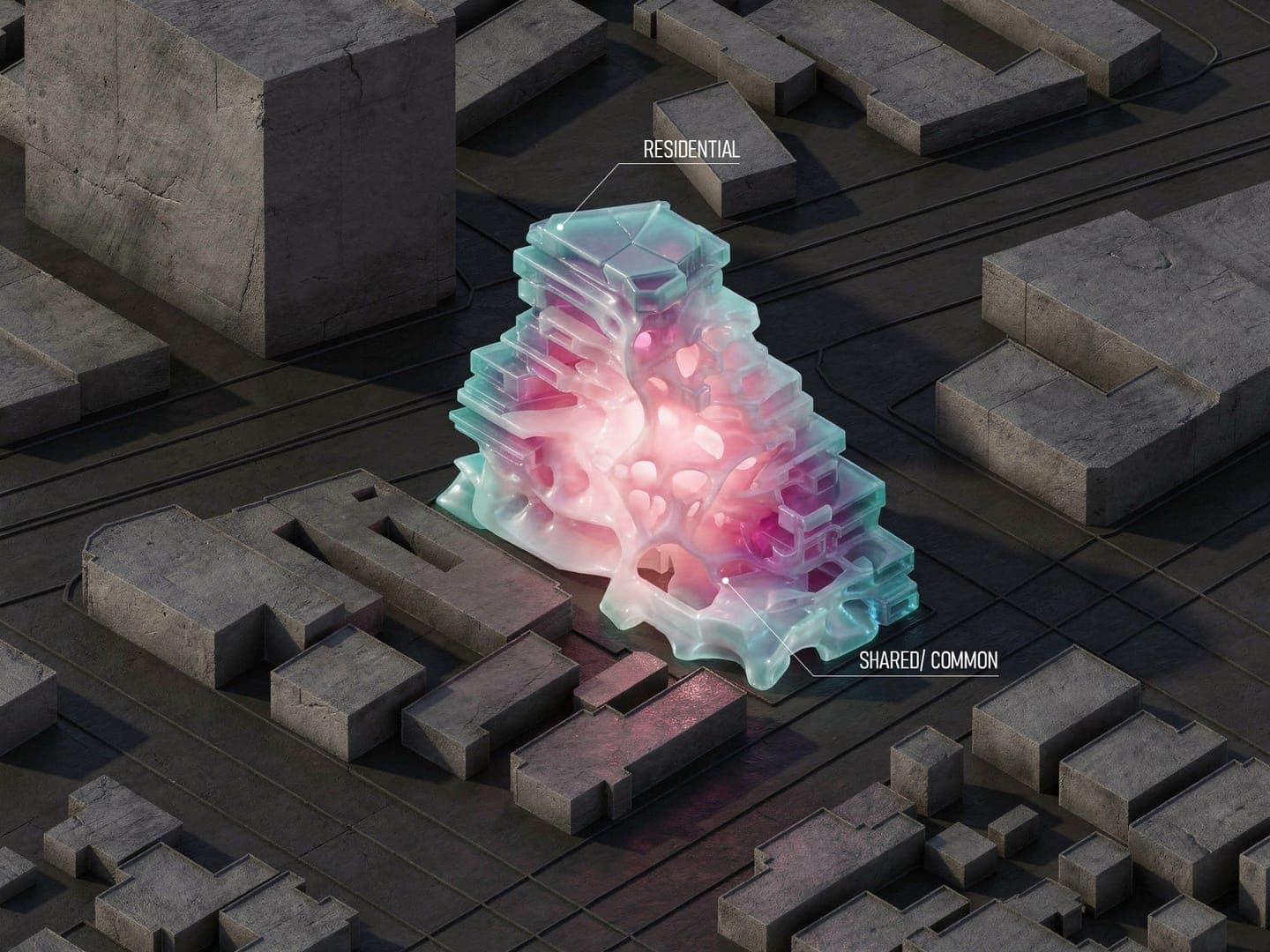
Unit Types
Three unit typologies are defined by their level of exposure to the farm: maximum, medium, and minimum.
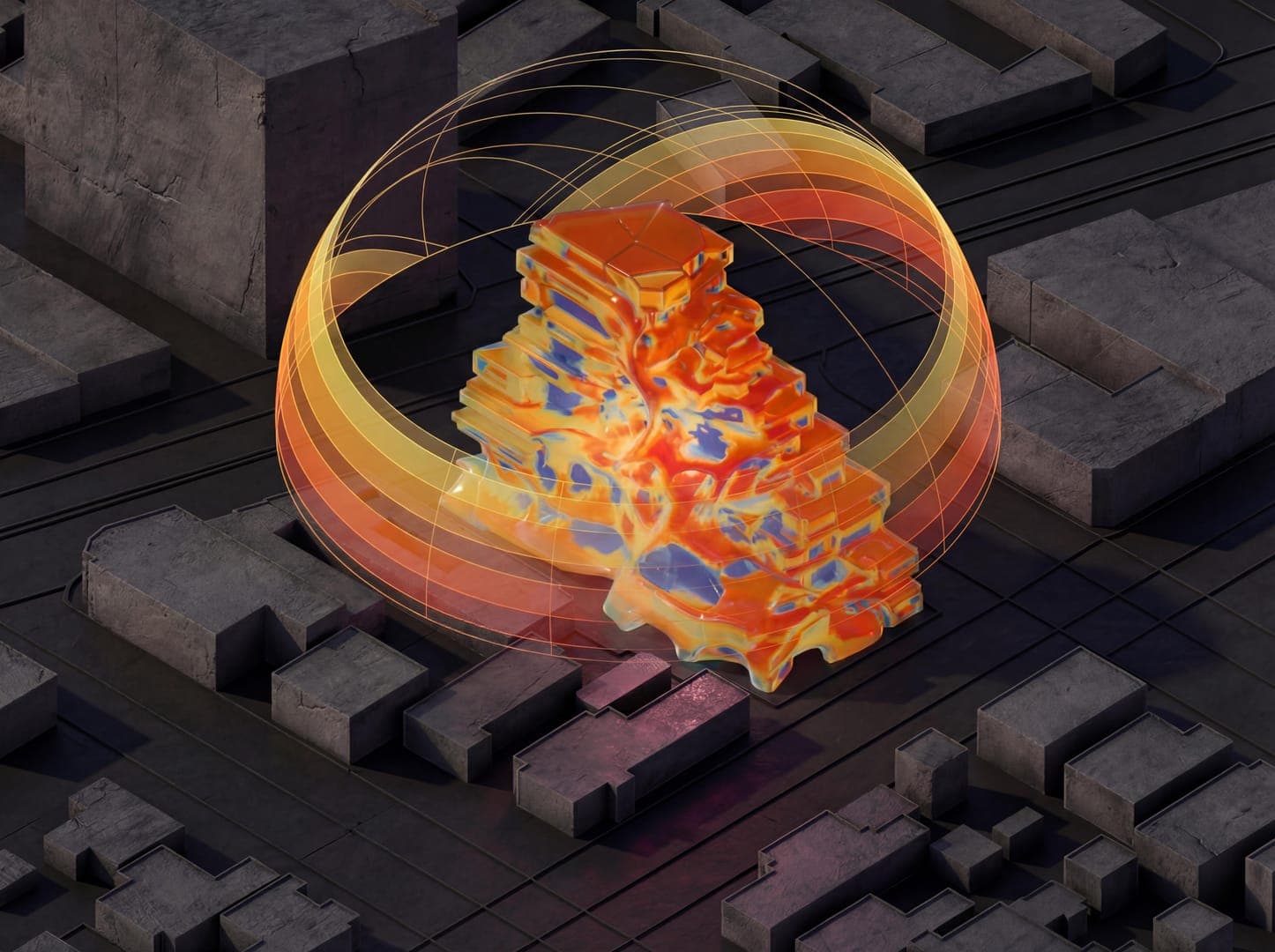
Dwelling Configurations
Dwelling configuration studies showing how units adapt to different levels of farming engagement.
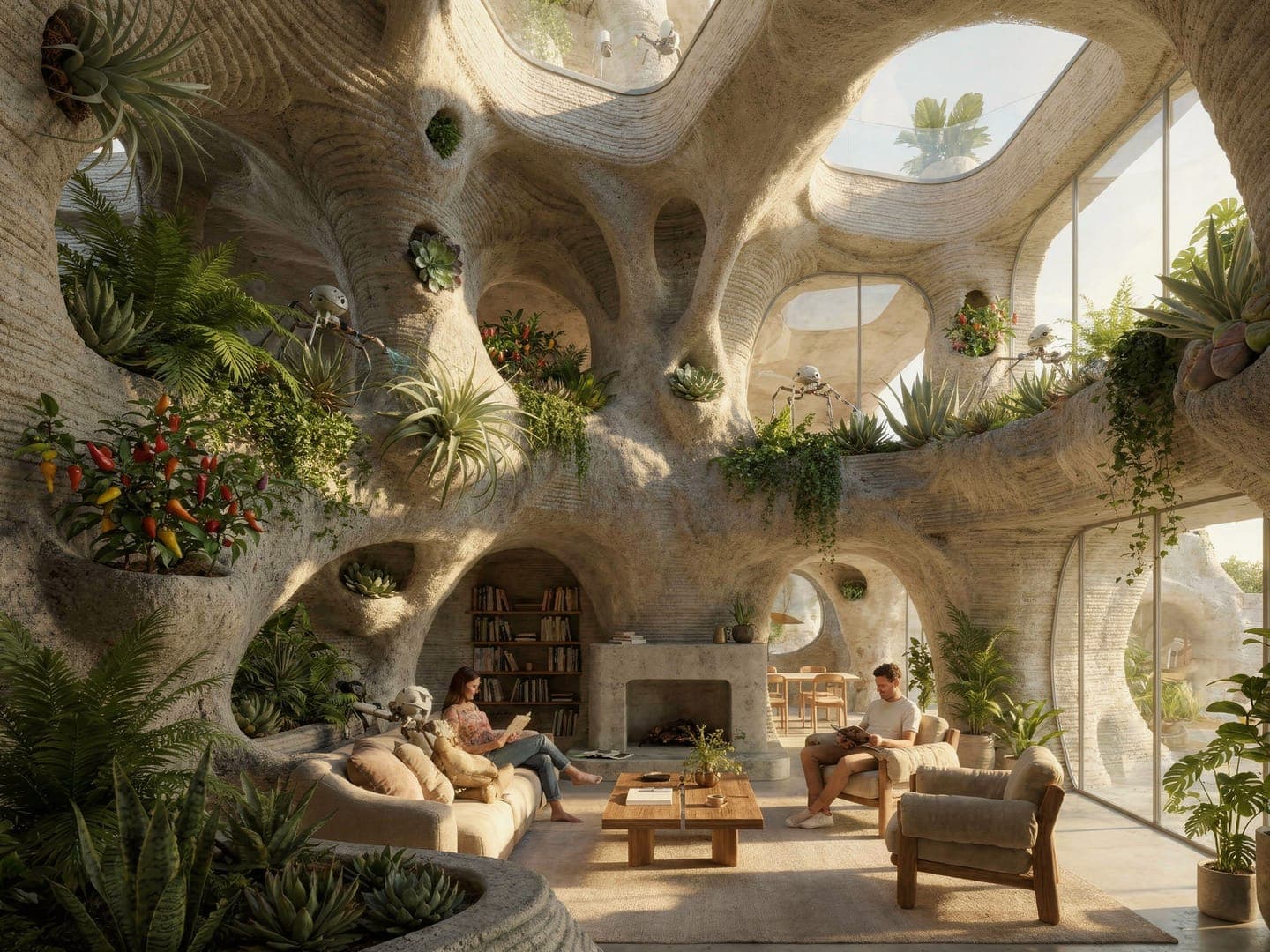
Interior Spaces
Interior spaces are designed to be flexible and adaptable to the needs of the residents with organic and farming integrated walls and floors.
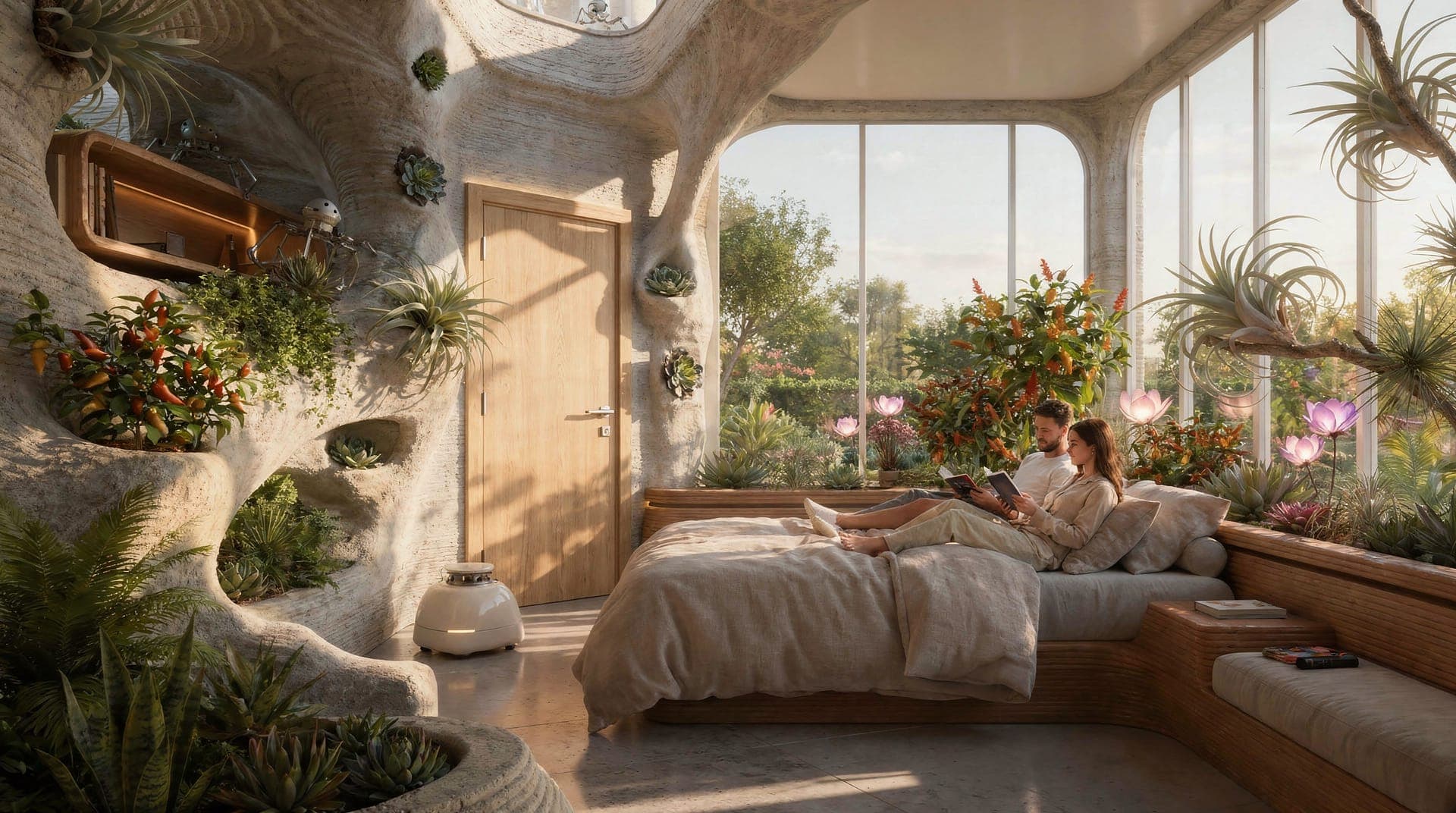
Living Units
Living units are designed to be comfortable for human needs with solid spaces and dynamic walls and floors.
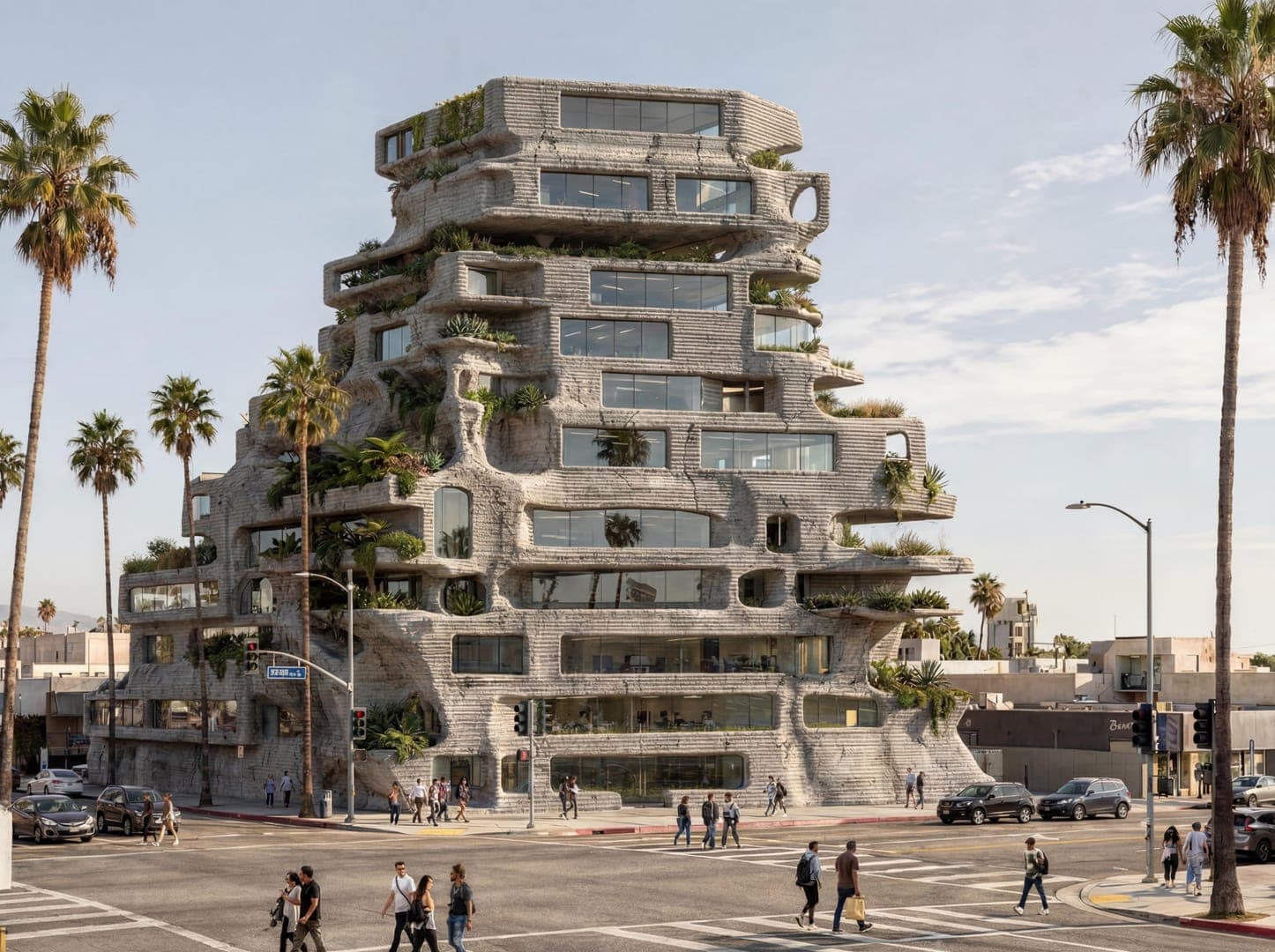
Living Unit Detail
Detailed view of living unit design integrating natural materials and farming systems into everyday domestic space.
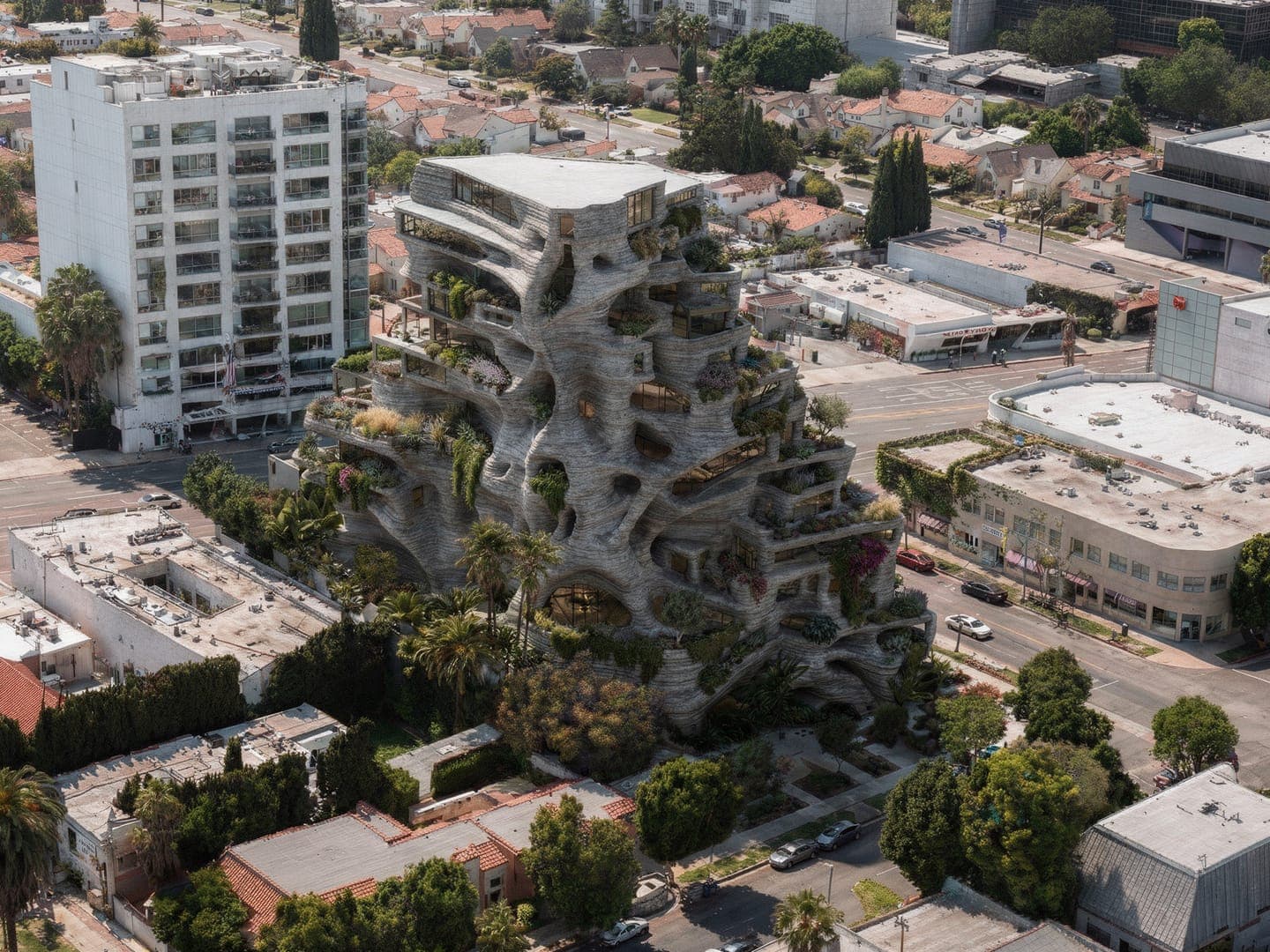
Domestic Farming
Domestic farming integration within living units creating a seamless connection between habitation and cultivation.
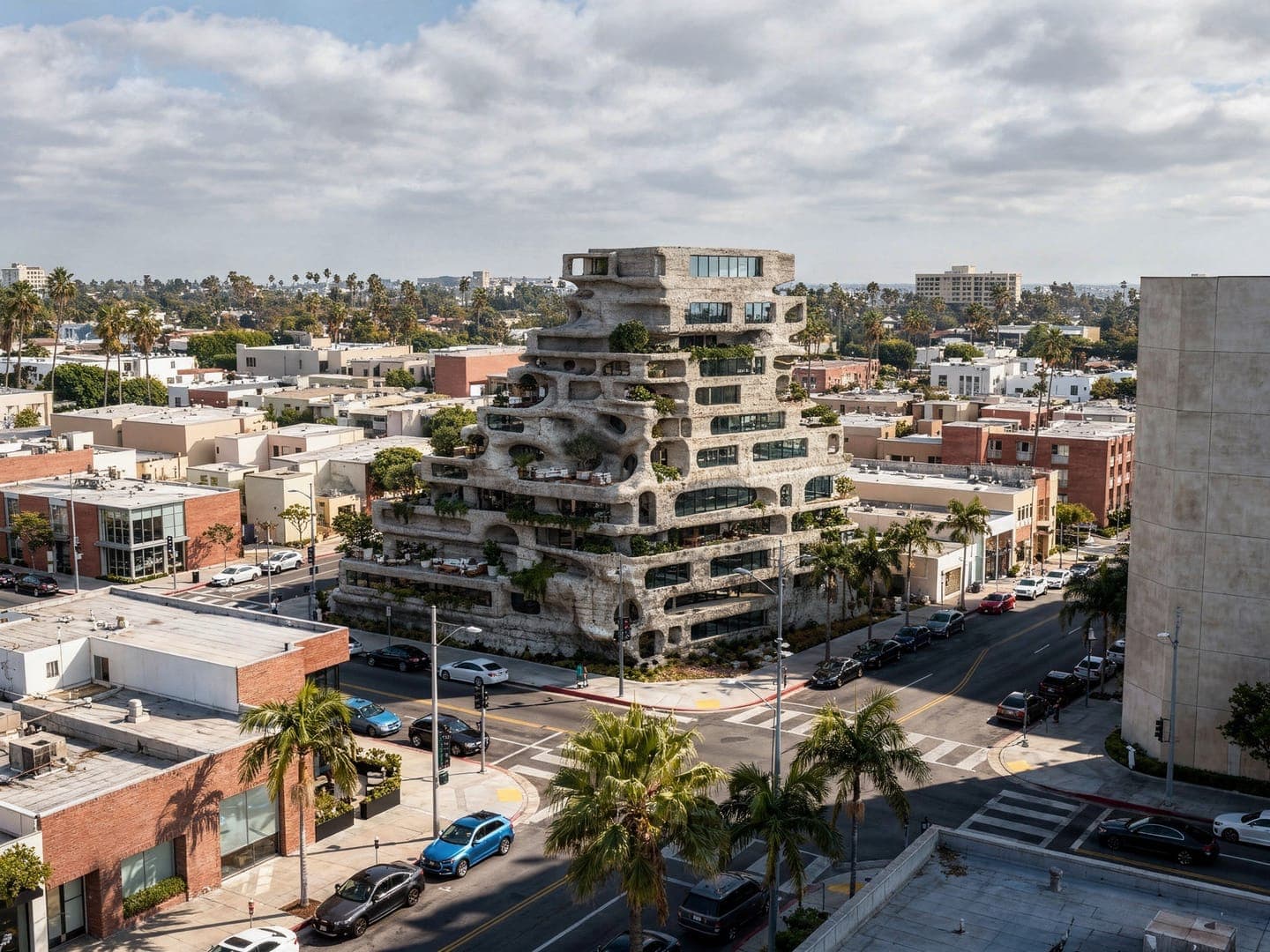
Urban Farming Tower
The Floresomatic tower as an urban organism integrating farming, living, and public space within the Los Angeles city grid.
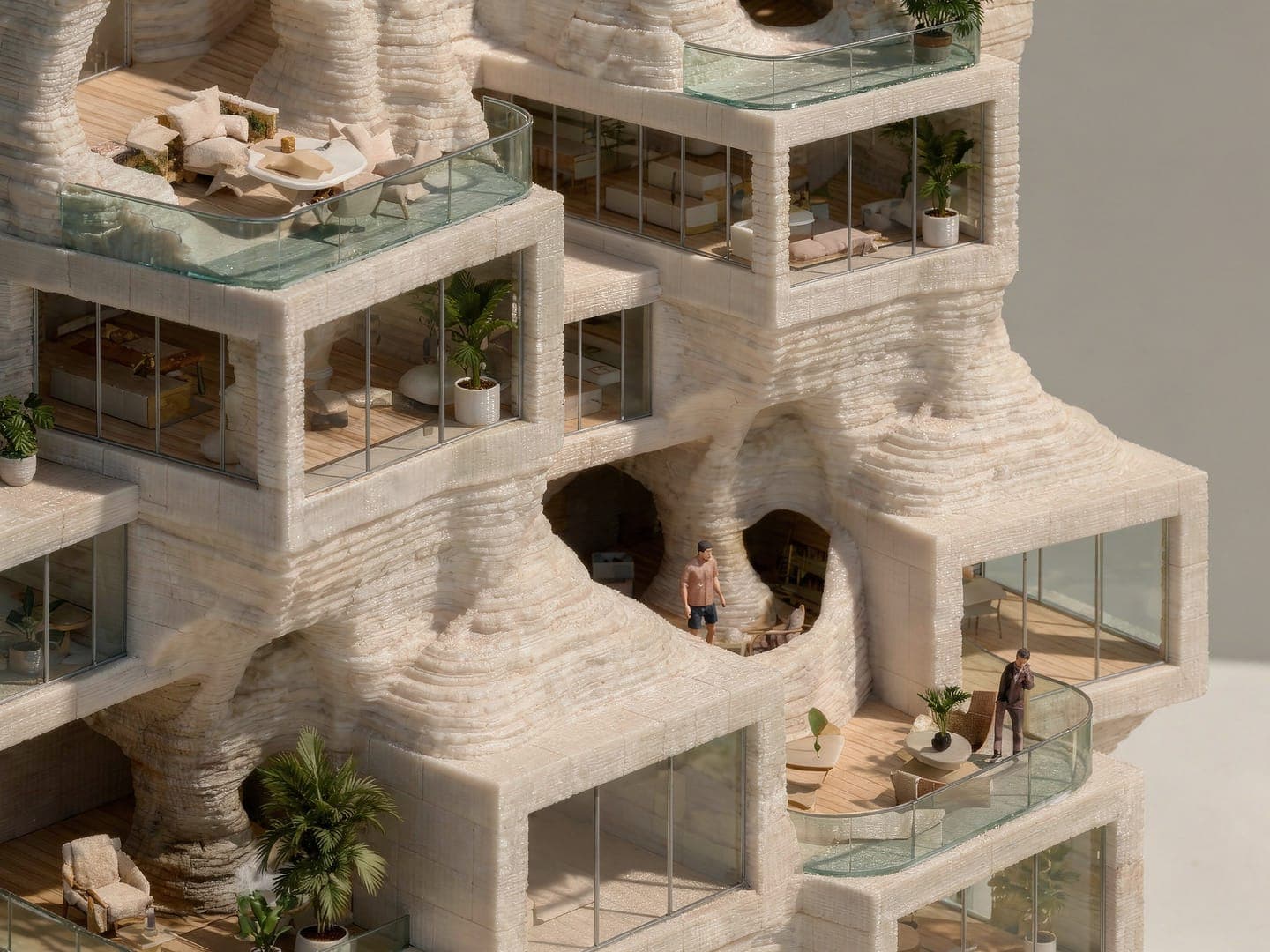
Structural System
Structural systems offers adaptability and evolving form to residents needs.
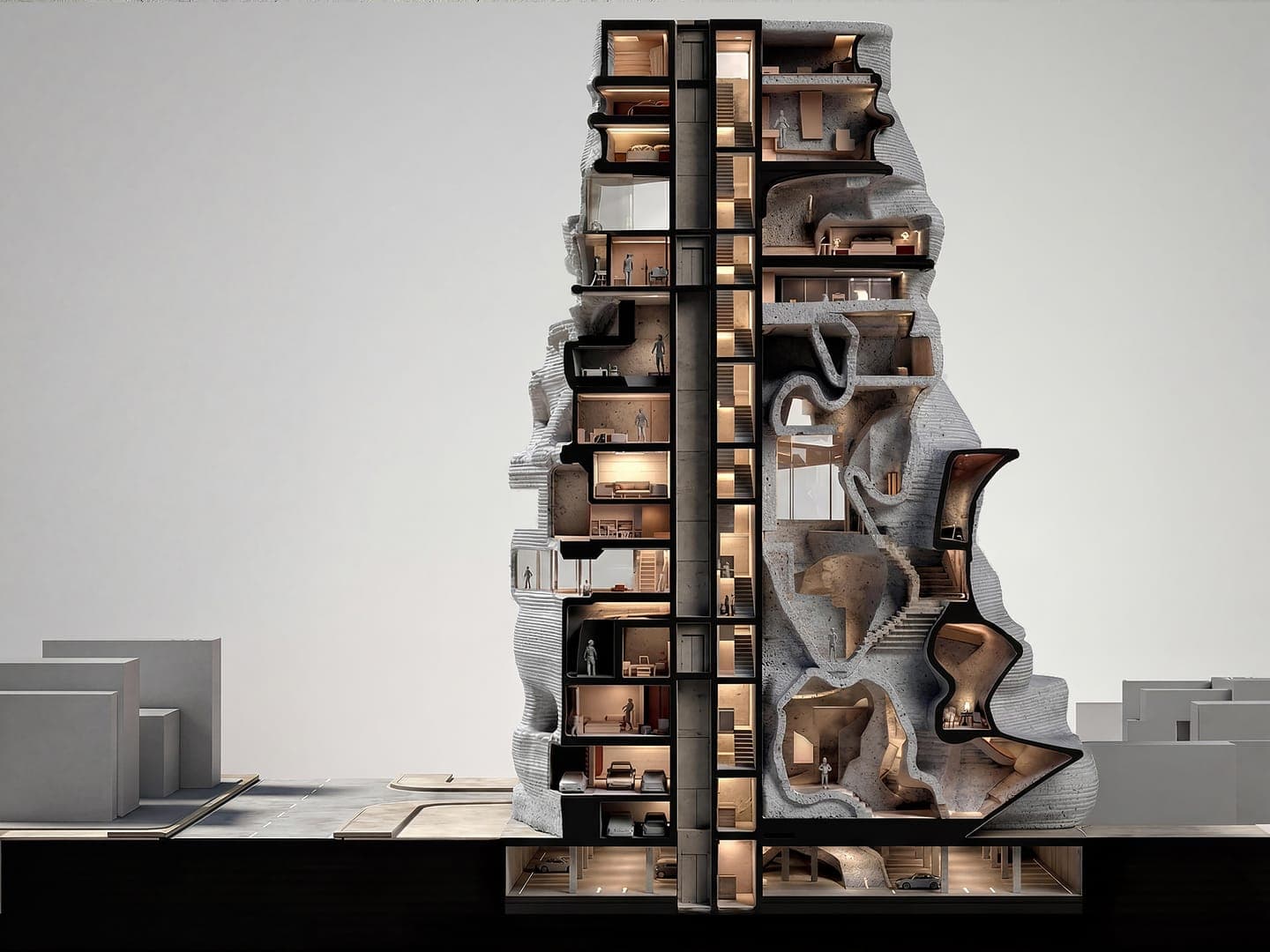
Form Generation
Final form generation integrating structural and environmental systems into a cohesive architectural whole.
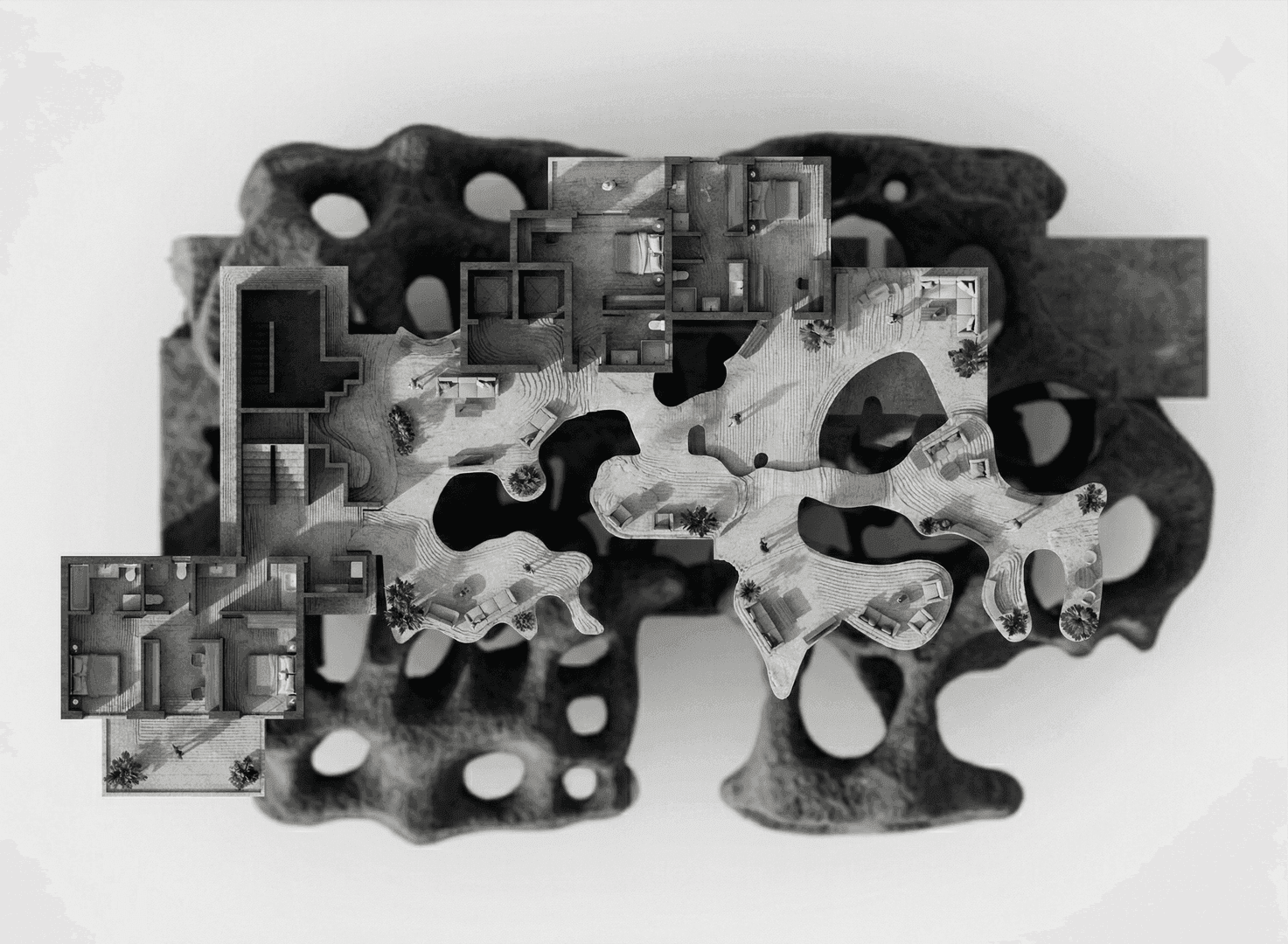
Spatial Configurations
Plans are in progress to offer residents the experience of gamified farming with different spatial configurations.
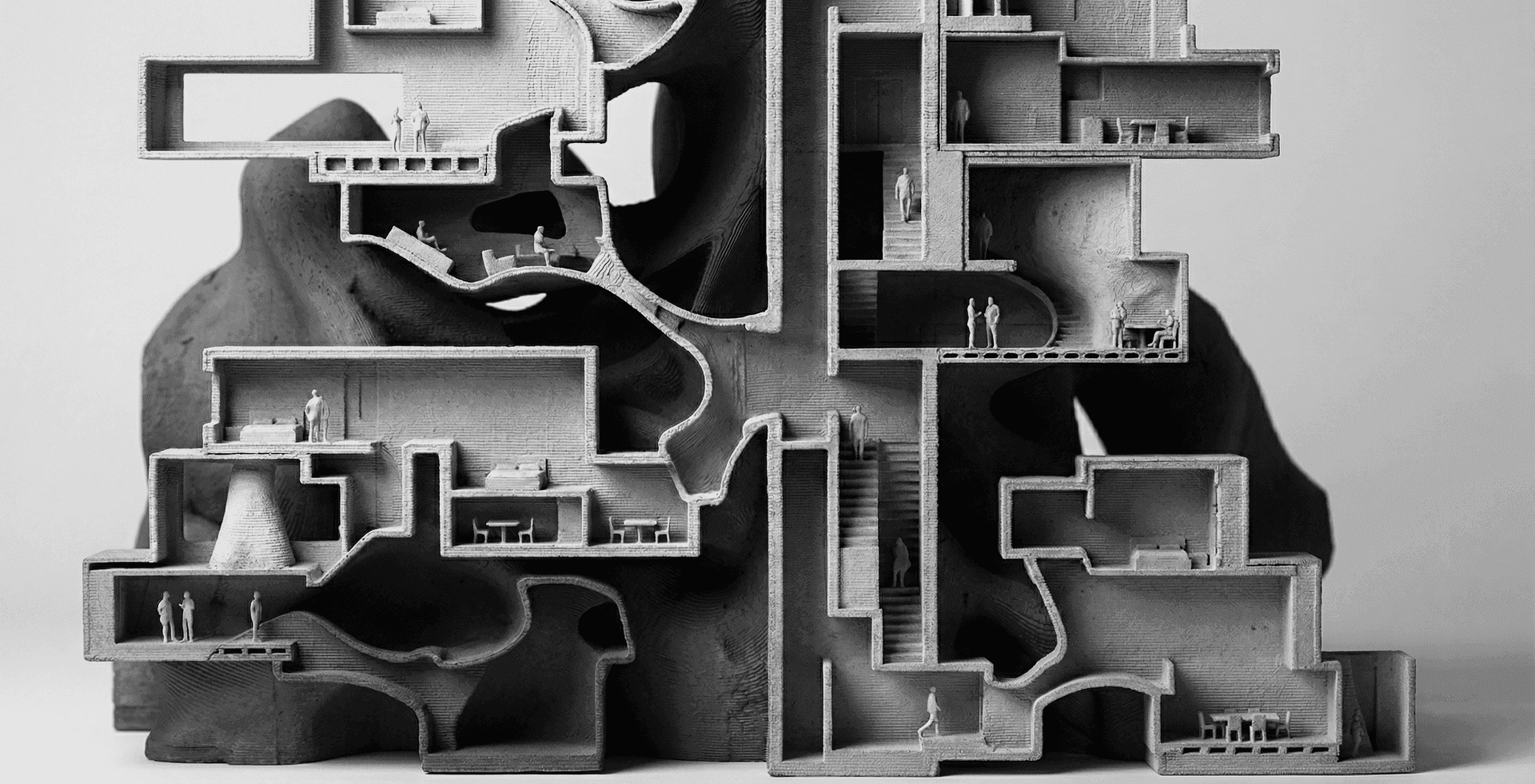
Presentation Boards
Presentation boards showcasing the idea of indoor and outdoor relationship with the farm.
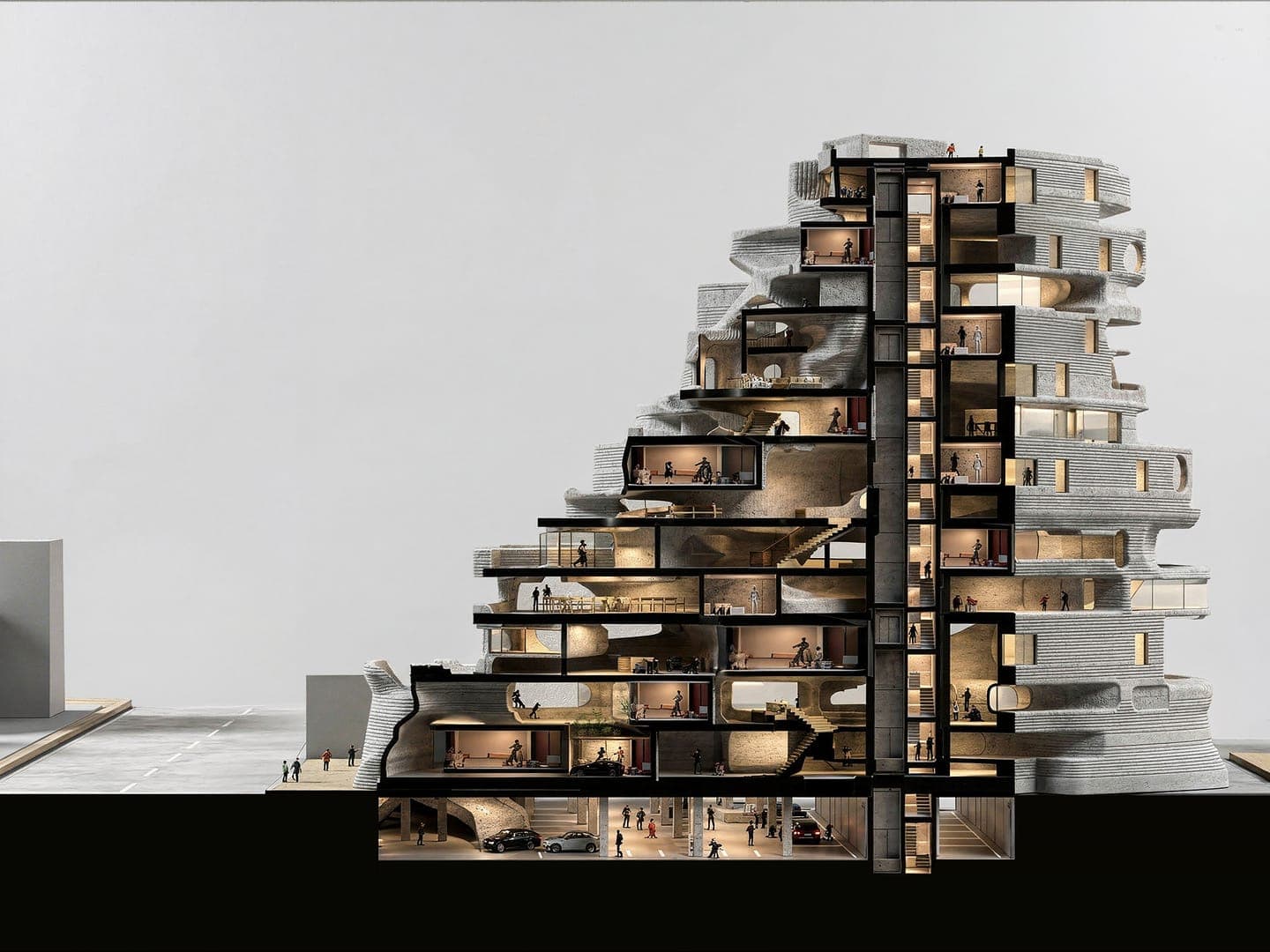
Final Renders
Final architectural renders demonstrating the completed vision of the Floresomatic cyber-physical farming ecosystem.
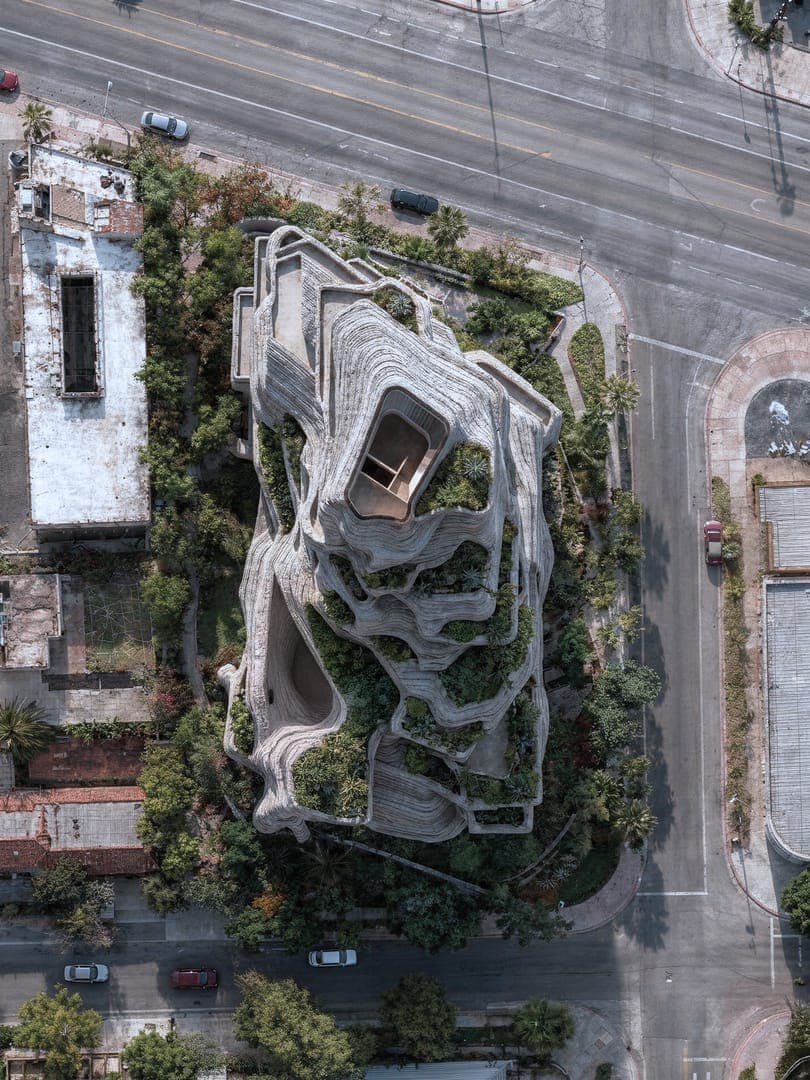
Exterior View
Exterior view of the Floresomatic complex showing the integration of farming tissue with co-living architecture.
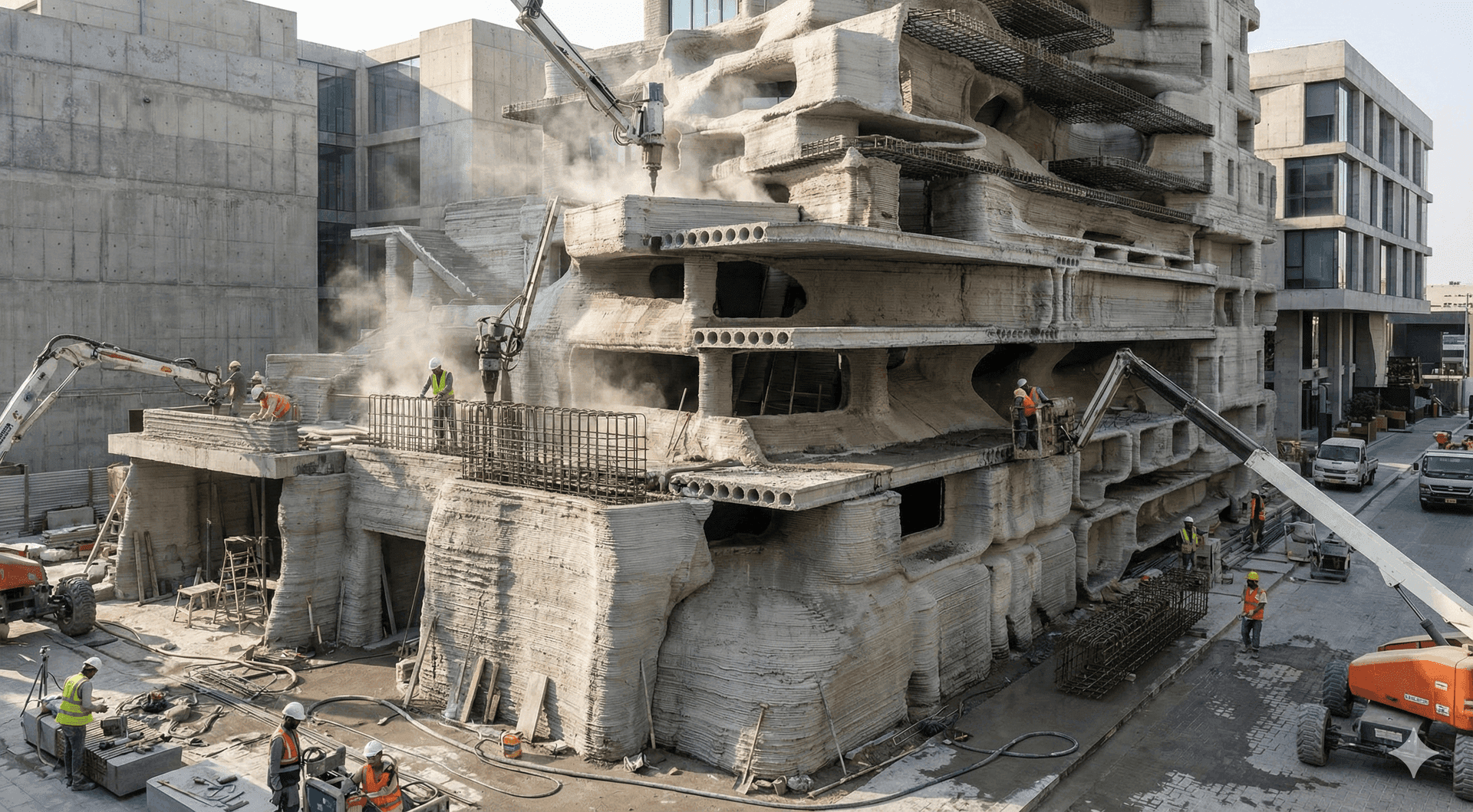
Atmospheric Render
Atmospheric render capturing the living quality of the cyber-physical farming environment.
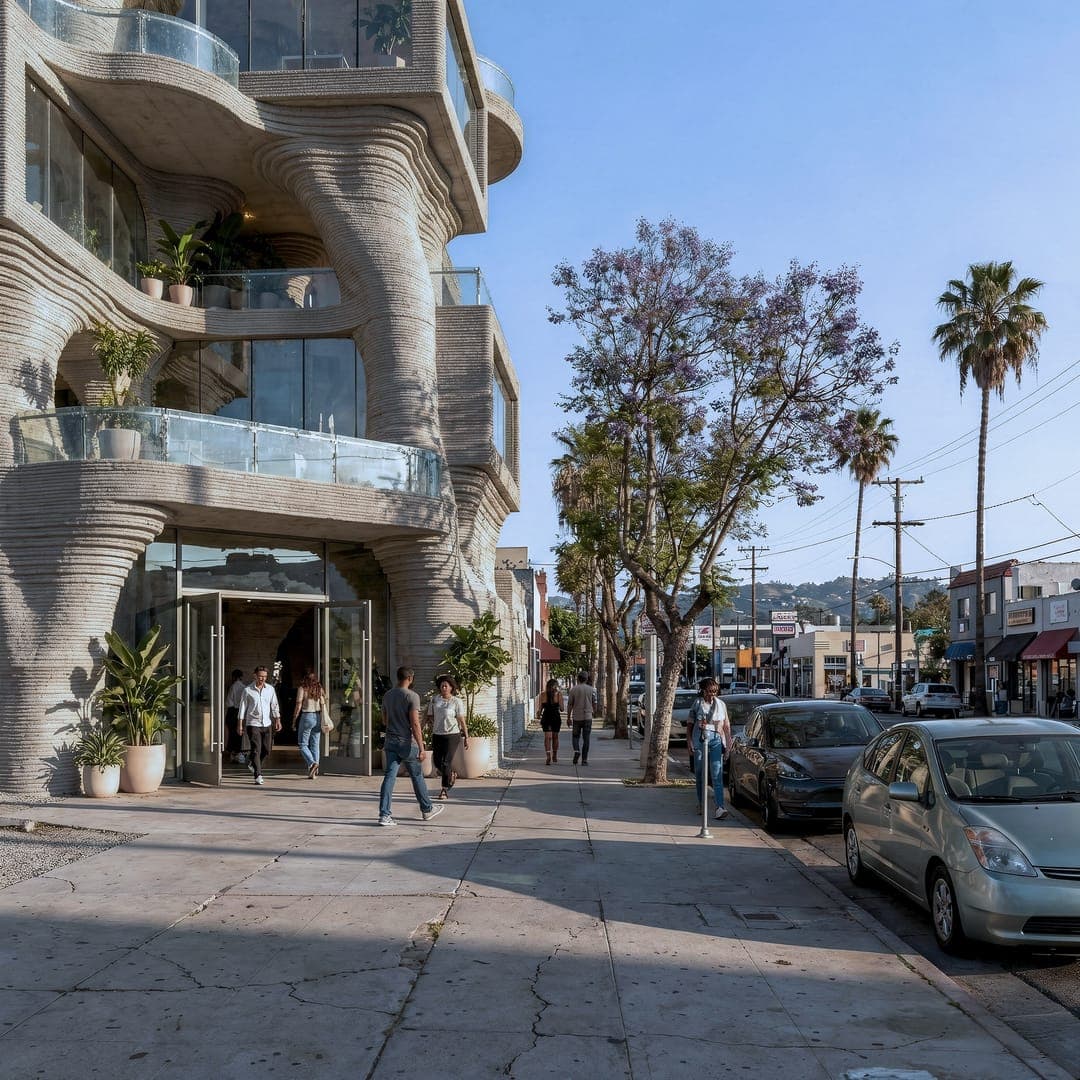
Urban Integration
Urban integration view showing how the Floresomatic complex relates to and transforms its surrounding city context.
Project Walkthrough
Complete video walkthrough of the Floresomatic project showcasing the cyber-physical farming system.
VideoCyber-Physical Farming Engine
Animated demonstration of the cyber-physical farming engine and its interaction with the architectural space.
Video